"He must have done something. They don't kill you for nothing." - Chicago Gangster Ted Newberry. Rubbed out January 7, 1933
Showing posts with label Kansas City. Show all posts

Wednesday, October 28, 2020

Some People Can't Take No For An Answer


Kansas City gangster Saul Weissman, known as Solly, was bumped off on October 28, 1930 after a run in with Charles Haughton, head of a racing wire service in K.C. Weissman, known also as "Cutcher Head Off" and "Slicey Solly" was a bootlegger and all around general racketeer. His nicknames also more than denotes that he was a violent sort.

Originally from St. Louis, Weissman also had dealings in New York and Chicago. He first approached Haughton a few years earlier. He wanted the wire service provider to give him racing results before sending them out to bookies so he could place bets. Haughton declined.

Later Weissman approached Haughton again, Solly was getting into book making and wanted Haughton's services. Haughton declined. He didn't want to do business with him. This was followed by another request and refusal. "Well, you're going for a ride one of these days." Solly told sneered. This was followed by one more request by Weissman. Again he was refused. Weissman later left town, returning months later to face a charge for bootlegging.

Weissman returned to town to face a bootlegging charge, which he beat on October 28, after leaving the courtroom he headed for Haughton's wired service. 

Haughton, who didn't even know that Weissman was back in town, entered his race wire service. Climbing the stairs he reached the outer room. Weissman was sitting in a chair and, when he saw Haughton, he started to curse him and stood up. Haughton's mind started to race, He drew a .45 and when he heard Weissman saying something about "shoot" while reaching for his pocket, he fired his gun. A bullet tore into Weissman's throat  and he dropped to the floor while Haughton fled.

After hiding out for a bit, Haughton turned himself in but was found to have acted in self defense. Weissman went to the hospital where he died the next day. A search proved that Weissman was unarmed when shot. When discussing the shooting with the police, he told them that he told Haughton, "You don't have the guts to shoot - But he had."


Solly Weissman


Wednesday, August 12, 2020

Live By the Gun, Die By the Gun...A Minute Later

 -

A chance encounter with a Kansas City sheriff and his deputy changed what should have been a typical on-the-spot killing into gunfight costing two of the killers their own lives.

Sheriff Thomas Bash was returning from a fund raising social engagement with his deputy Lawrence Hodges. The officers were escorting the car which contained the money raised at the party. Hodges was driving and Bash was in the passenger seat. In the rear sat Bash's wife and a neighbor girl of 15. 

It was about 1:15 in the morning on August 12, 1933. As the police car advanced towards Armour Avenue Bash and Hodges saw a series of flashes and heard gunshots. This was followed by a woman's screaming. What the two law officers heard was the murder of bootlegger and nightclub owner Ferris Anthon. In addition to his KC operations, the dead man had ties to Chicago where he was knows as Kansas City Tony. Anthon was living at the Cavalier hotel and had just returned from a night out with his young wife, mother-in-law and his wife's younger brother. While his wife and in-laws headed for the hotel, he stayed back to lock up the car. According to his wife, a man with a handkerchief over his face came from between two cars and shot Anthon down with a  machine gun.*

After the shooting, a sedan containing mobsters Sam Scola, Gus Fasone and a man later identified as Thomas Lacoco came barreling around the corner, heading straight for Bash an Hodges. Realizing a crime had take place, Bash grabbed the police car's shotgun and jumped out the passenger side door; Hodges from the driver's side with a his side arm in hand. 

Seeing their way blocked, Scola and Fasone opened fire on the officers. Bash fired a round through the windshield, reloaded and fired another round through the windshield reportedly taking off the tops of the gangsters heads. Lacoco Leapt from the car and ran as Hodges gave chase; both men firing at each other.  After the Bash's second shot the gangster car careened into the the police vehicle.

Bash wanted to check on his wife and neighbor but another hoodlum, Charles Gargotta, came running up firing at the sheriff. Loading another shell into the shotgun, Bash ran towards the attacking hoodlum. who, realizing he was about to be cut down, dropped his gun and surrendered. In the meantime, Hodges had lost sight of Lacoco, but found his abandoned gun, and returned to the scene.

Gargotta and Lacoco would subsequently be exonerated from any wrong doing. The four gunman were said to be underlings of Kansas City gang boss Johnny Lazia.

*no machine guns were found.

 Ferris Anthon -      sam scola -     Team Members Archive | Hillsboro Aero Academy

Ferris Anthon             Sam Scola              Gus Fasone


Wednesday, February 12, 2020

A machine gun toting coward killed Mr. Howard

howard -

At a little after 2 am on this day back in 1931, Kansas City, Missouri experienced its first gangland hit involving a Tommy gun. The victim was 38 year-old bootlegger Jimmy Howard who, we are told, refused to fall in line with other KC rum runners in a forming a syndicate. Apparently Howard brought in premium stuff from Canada so was able to both charge more and please customers.

According to police, Howard, an ex-boxer, was originally from St. Louis, where he was a member of Egan's Rats.  For his alcohol business, he used the office of the A.B.C. cab company to take phone calls. In 1927 he arrested for the murder of cabaret singer Bobby Barrone. Barrone was a practical joke who liked to pull a pistol out of his pocket and tell people to "Stick 'em up!" One night he played his joke on Howard, who wasn't in on the gag, and Howard pulled out his own gun and fired. He was exonerated. He had been picked up and questioned periodically for other crimes.

Defying the other KC gangsters put Howard on the spot and he knew it. It was reported that in the last few weeks of his life he was very nervous. Hours before he was finally rubbed out, somebody took to shots at him as he was leaving his girl friends apartment.

Around 2:20 that morning, Howard stood in the front office of A.B.C taxi company speaking with one of the owners when two men walked up. The men stopped in front of the large picture window and, opening his coat, pulled up a Thompson machine-gun which was strapped to his arm and blasted through the picture window. The guy with him pulled out a pistol but didn't need to use it. Howard was perforated by fourteen bullets and expired a few hours later.

A sedan pulled up and the two gunmen jumped in and sped off. Since a tommy gun was used, it was assumed that the killer was a torpedo brought in from Chicago.

jimmy howard -


Saturday, June 15, 2019

One Bourbon, One Scotch and Three Bullets

6154 -

In the early morning of this date back in 1932, St. Louis gangster Milford Jones stood drinking at the bar of Detroit's exclusive Stork Club. Jones speaking with the clubs entertainment, a singing duet known as Tracey and Duncan, when somebody, or somebodies, came up from behind and fired three bullets into his back and head. Tracey, Duncan and forty or so patrons and staff members vacated the club. Jones, sprawled on the floor, his feet entangled in the brass rail, lay by his lonesome for about seven hours before the club's owner decided he should call the police.

Jones was a former member of St. Louis' Cuckoo gang but split with them when his pal Tommy Hayes splintered from the group. From St. Louis he went to Kansas City where he had dealings with a casino, Effects found on his person told police that he had been traveling between Detroit, Cleveland, Toledo, Chicago and Kansas City.

615p -
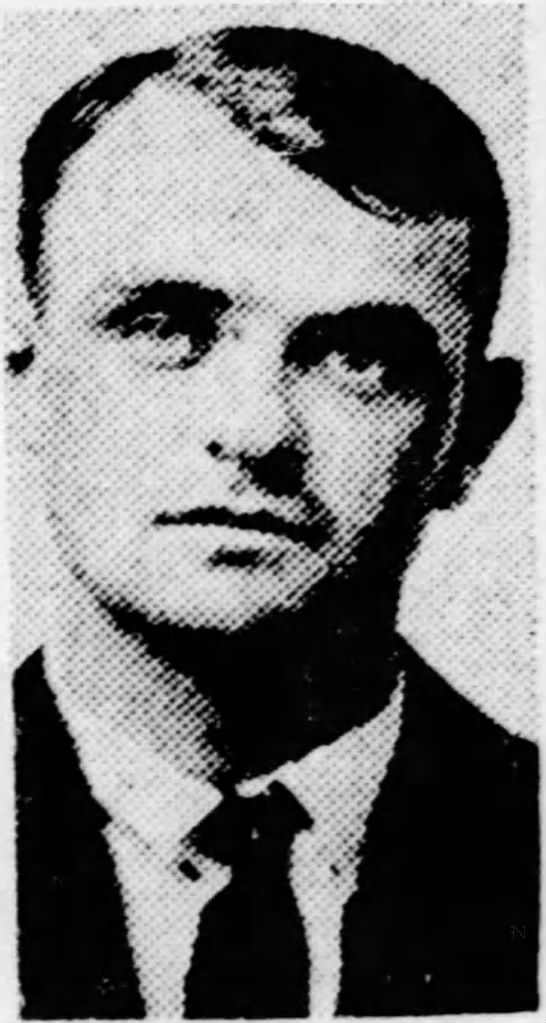
Milford Jones

Saturday, April 6, 2019

Shots for the Doc


Sam "Doc" Miller was a Kansas City gangster who made his way to the twin Cities of St. Paul and Minneapolis. As a member of Solly Weisman's gang back in K.C., it was reported that Miller took part in hijackings as well as kidnapping underworld characters and holding them for ransom. This was on of the motives given for his murder. Supposedly had had been involved in snatching Chicago hoodlums around the time of his execution.

Miller came to Minneapolis sometime in 1928 with some associates and opened a roadhouse called "The Belles", which offered gambling. It closed a short time later. According to police, at the time of his death, Miller had just cancelled a lease on a St. Paul apartment that he intended to use as a gambling joint, after being warned by the St. Paul underworld to stay out.

The end came for Doc Miller at around 1:00AM on this date back in 1930. He phoned his wife from a pool hall saying that he was on his way home. On his way he noticed that he was being followed by two cars. He attempted to lose the tail by going around the block near his house. As he came around the second time, one of the cars pulled out and cut him off. The car following him pulled up and some words were exchanged. One witness stated that Miller cried out, "Don't shoot!"

Miller, who had taken to carrying a pistol a week or so before hand, managed to fire a couple shots just as a sawed off shotgun was fired at him. He was struck by the blast, which was followed up with numerous pistol shots, seven of which, landed in the gangsters.

The killers pulled away and drove around the block and came back around slowly passed Miller's auto to make sure that their job had been successful. It was.

The top three theories for the murder given by police were-
1) Revenge for a previous gangland killing.
2) Chicago or Kansas City gangsters getting even for a kidnapping.
3) St. Paul gangsters not wanting any competition in the gambling racket.

Sam "Doc" Miller