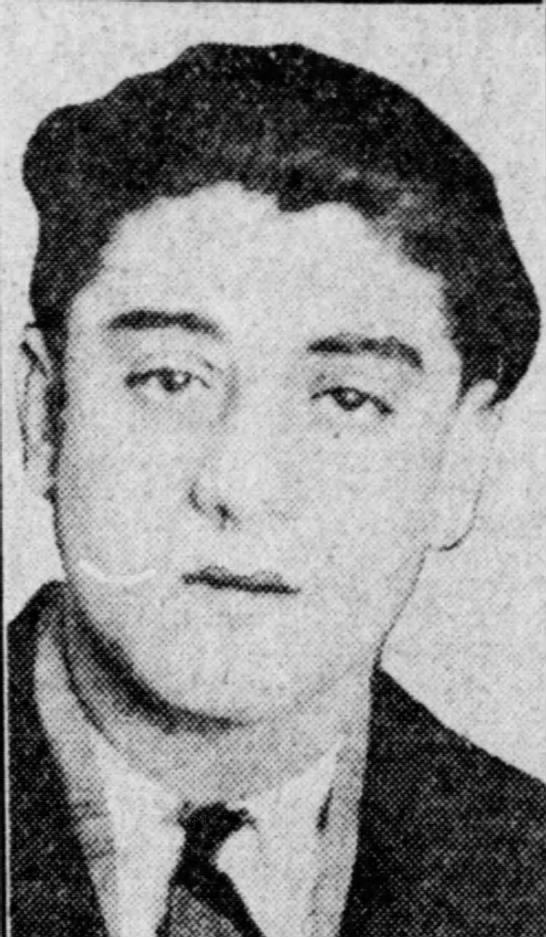
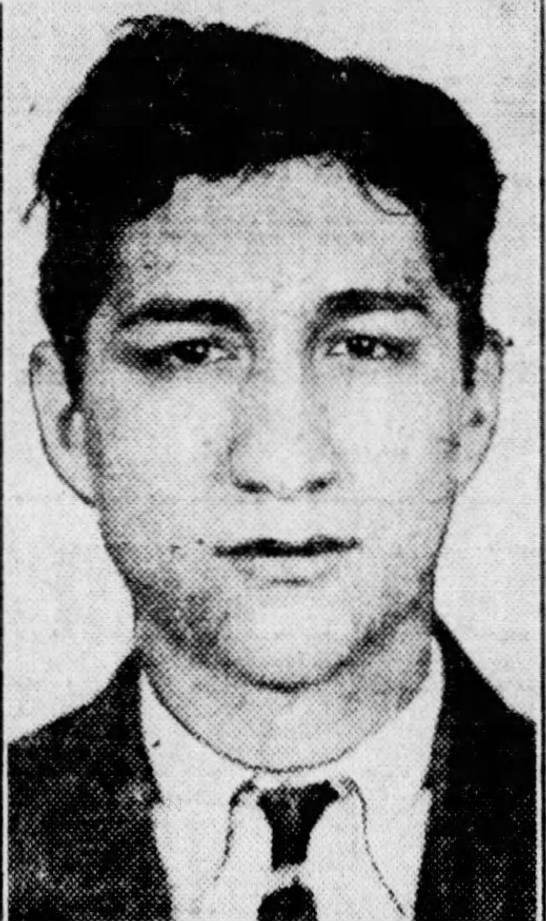
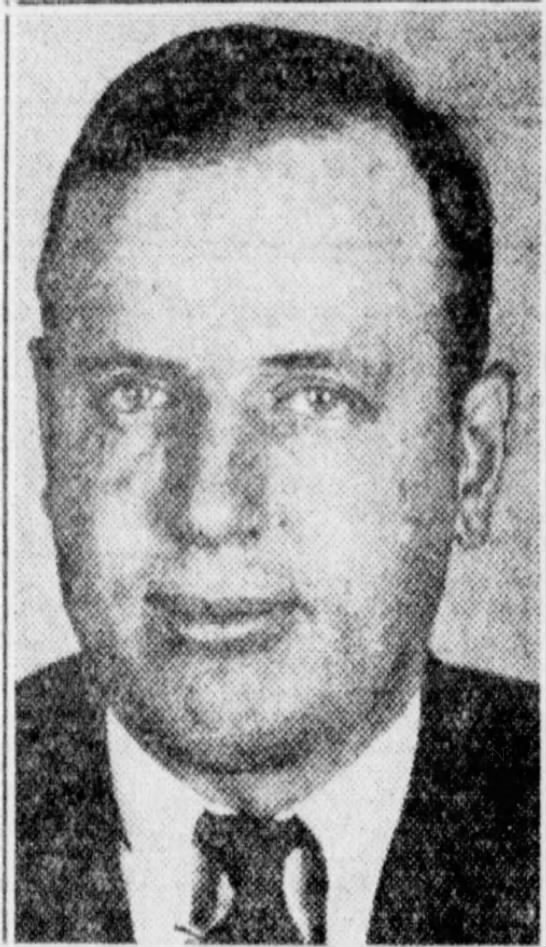
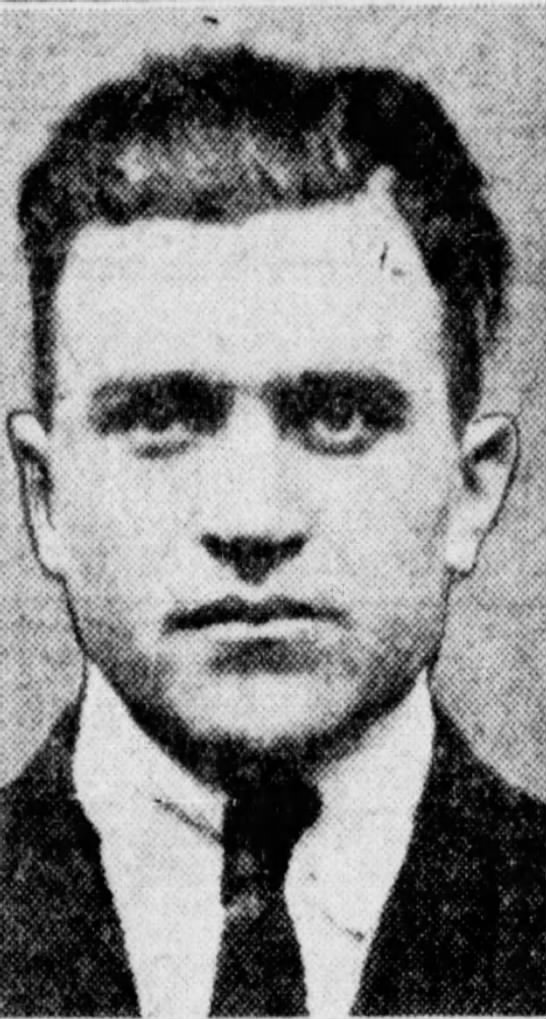
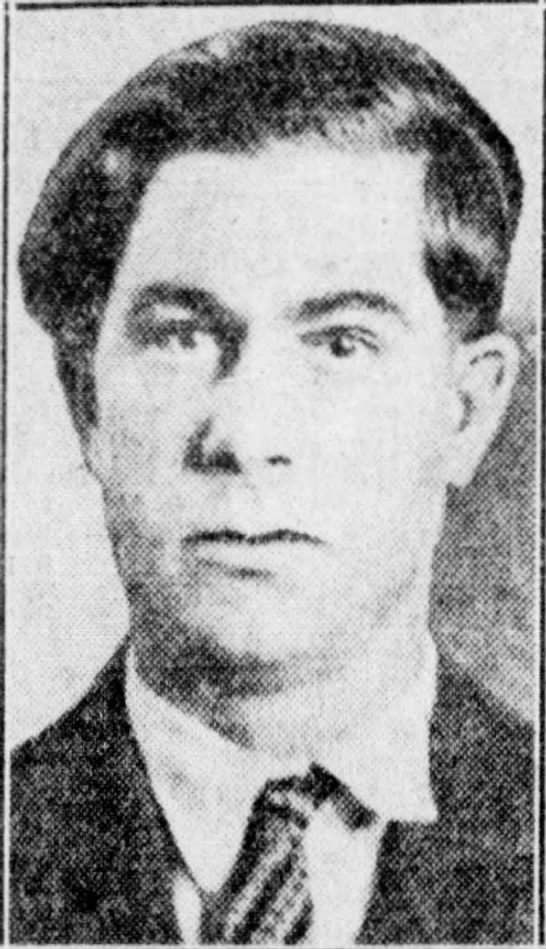
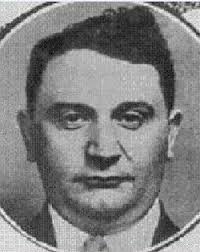
"He must have done something. They don't kill you for nothing." - Chicago Gangster Ted Newberry. Rubbed out January 7, 1933
Showing posts with label Detroit. Show all posts

Sunday, November 29, 2020

When Gangland Gets There First


November 29, 1933 saw the demise of gangland killer and one time South Dakota sheriff, Verne Miller. A veteran of WWI, Miller became the sheriff of Huron, South Dakota but fled office with about $2800. He was captured and sent to prison where he was released after serving 18 months.

Upon his release he became involved in bootlegging and then drifted into bank robbery in the late 1920s and early 1930s. On June 17, 1933, in a botched attempt to free his friend Frank "Jelly" Nash from the FBI, Miller and two cohorts, supposedly Pretty Boy Floyds and Adam Richetti, ended up killing Nash and five of the law men with him in what is known as the Kansas City Massacre.

After the KC Massacre the FBI was determined to bring Miller in. The hottest man in the USA, Miller found himself unwelcome in the Midwest underworld. He headed east where he was friendly with New York syndicate boss Louis Lepke Buchalter. A Lepke associate named Al Silvers helped Miller with a car and some optometry equipment to use as a front as an eyeglass salesman.

Knowing the Lepke was friendly with Miller, the FBI paid the gang lord a visit and let him know that things could get hot for him if he aided Miller. On November 1, Miller escaped a shootout with the FBI but dumped his bullet riddled car. Inside the auto the FBI found the optometry equipment and were able to trace it back to Al Silvers, who went into hiding.

Lepke had a dilemma; if the FBI caught either Silvers or Miller what might they spill in an attempt at leniency? Silvers was the first to go on November 20. Lepke's boys caught up with Miller in Detroit nine days later. Liker Silvers, Miller was garroted by those he knew and probably trusted. He was then bludgeoned to death with a hammer. His naked body, like that of Silvers, was found tossed on stretch of road covered with a blanket.


Verne Miller


Tuesday, October 27, 2020

Ziggy Bites The Stardust


The wee hours of October 27, 1929 saw the demise of Detroit gangster John "Ziggy" Selbin. The Detroit News described him as a petty gangster and hanger-on of the Purple Gang with a list of arrests, mostly for robbery. He was also a confederate of Irving Shapiro. Purple Gang historian Paul Kavieff fills informs us that Selbin robbed many nightclubs and blind pigs that belonged to gangsters in the area of Hamtramck. Since these gangsters bought their booze from the Purples, it was their responsibility to get rid of Selbin. Another thought is that as a pal of the late Irving Shapiro, Selbin was living on borrowed time anyways.

On Saturday night, October 26, Selbin told his parents, (the 22-year old youth still lived at home) that he was going to a Halloween party. At about half past midnight he was standing in a doorway speaking with a man who pulled out a .38 and fired five shots at the young gangster. Three of them found their mark and Selbin crumpled to the ground. The hoodlum expired while being loaded into a patrol wagon to be transported to the hospital.


John "Ziggy" Selbin

Wednesday, September 16, 2020

Purple Reign


What remained of the gang known as the Little Jewish Navy (so called because they sailed their boozein from Canada), was sunk on September 16, 1931 in Detroit. The members were former Chicago hoodlums named Isadore Sutker (called Joe in the press), Herman "Hymie" Paul, and Joe Lebovitz. In the mid Twenties they had left Chicago for health reasons and hooked up with some Purple Gang members in their bootlegging enterprise. By 1931 they had opened up a bookmaking operation in the Motor City as well as continuing to bring in booze. Problem was, they didn't respect any of the territories set up by the Purple Gang and other Italian gangsters. 

By the late summer of 1931 it was decided that they had to go. A meeting was set up under the pretense to discuss business. A furnished apartment was rented in the Collingwood Manor apartments at the beginning of September. Nobody moved in. The only trace that somebody was there was can of green paint. Using a mutual friend as an intermediary, Sutker, Paul and Lebovitz, were lured to apartment 211, along with the intermediary. After a few moments one of the Purples left, supposedly to make a phone call, in actuality he went to the alley and started the car. He revved the engine and blew the horn. The signal. At the sound, the remaining three Purples drew their guns and shot down the trio of gangsters in what became known as the Collingwood Massacre.

Being a friend of the Purples, the intermediary was allowed to escape with the gunmen. A decision that cost the murderers over thirty years in prison because he was arrested and his testimony was used to put them away.

Oh, and the green paint, that was there so the gunmen had a place to ditch their guns to obliterate fingerprints.  


For more on this and the Purple Gang check out:


Monday, July 27, 2020

Purple Reign is Over

 -

Twenty-four year old Irving Shapiro was a feared member of Detroit's Purple gang and had the distinction of being the first of that particular gang to go for a one-way ride. Shapiro was adept at shaking down speakeasies, contractors and kidnapping. There were no shortage of enemies that would have liked to seen the man dead. It's possible that his own gang had him taken out.

Three days before Shapiro was erased, four member of the gang Abe Axler, Eddie Flectcher, Irving Millberg and Harry Sutton were sent to Leavenworth for bootlegging. There may have been some power moves by the remaining gang who decided that Shapiro had to go. Purple Gang historian Paul Kavieff states that Shapiro kidnapped a contractor and wanted to get $25,000 in ransom but his confederates settled for $4,000. Apparently Shapiro wasn't happy and told his gang mates that they would be kicking in the difference for his share or else. 

Well aware of their cronies ferocity, the remaining Purple Gang members picked up Shapiro in large grey touring sedan, he was in the front passenger seat. At about 3 o'clock in the morning, someone in the back seat placed a .32 at the left base of his skull and fired. The bull passed through his head and out his left cheek. Two more shots were fired to similar effect. The car pulled over and Shapiro was jettisoned.
 irving shapiro -
Irving Shapiro

Thursday, July 16, 2020

Really Detroit, Another One!!

 -

On the morning of July 16, 1930 A young Detroit woman left her house to run up to the local store. On her way she found the body of gangster David Overstein lying between two garages. He had been shot three times in the side of the head. She alerted a neighbor, who in turn, called the police.

Overstein was an ex-convict who had ties to the Purple Gang. In the early Twenties he was reputed to be a member of  the Oakland Sugar House gang. In 1928 he was sent to the Michigan State Reformatory for breaking and entering. Upon his release it was said that he got involved with bootlegging.

Overstein was last seen hanging around a corner at about 10 p.m. the previous night. Neighbors who lived nearby the garages where the dead gangster was found, said they heard one shot, around midnight, followed by three more. 

overstein -
David Overstein

Tuesday, July 14, 2020

Another Murder in Detroit

 -

The bullets were flying in Detroit the spring and summer of 1930, and bootlegger Henry Tupancy caught his lethal dose on July 15, 1930. Tupancy was arrested in 1922 for selling booze in his speakeasy and paid a $500 fine. By 1930 he was also producing the stuff, as was evidenced in a number of corn sugar receipts found on his person after he was killed.

Tupancy was sitting in his car along with another bootlegger, Louis Salvio, who was most likely a member of the Licavoli gang, having been arrested that spring with a number of Licavoli - Moceri gangsters following the murder of a police officer.

As Tupancy and Salvio sat in the former's auto, witnesses of a nearby street car, as well as some children playing, saw a man wearing striped linen pants, a cream colored silk shirt and a pair of black and white shoes, (no coat or hat) approach the car and, producing two guns, open fire on Tupancy. The victim was hit by nine shots and died. Salvio took a bullete to the gut, hopped out of the car and ran a short distance before collapsing.

Mobster Peter Licavoli was arrested for the murder. At the hospital, and later on the stand, Salvio played mute. He said he didn't even know Tupancy and didn't recognize the shooter. Seeing that Salvio, was probably a member of the Licavoli gang and not the intended target, he may have been setting Tupancy up and was hit by friendly fire.

Though Salvio didn't identify Licavoli as the shooter, a number of witnesses did and he was shipped off to prison for life. Salvio was living on borrowed time however. He got his the following October, but it wasn't the bullets of rival gangsters that brought him down, it was bullets from a jealous husband. The gangster was rooming with a married couple in a volatile relationship. The husband left home for period of time and came home and found his wife and Salvio "talking". The enraged husband killed Salvio and shot his wife, who survived.

tupancy -  salvio -
Henry Tupancy      Louis Salvio

Sunday, July 12, 2020

Sam I Was

 -

Twenty-eight year old Sam Cilluffo, started in the Detroit booze racket at the on set of Prohibition. He had been arrested five times since 1922, and did a stretch in Leavenworth for bootlegging. Cilluffo worked for East Detroit mob boss Angelo Meli, who during the summer of 1930, was at war with the West Side's Chester LaMare.

After the murder of two of LaMare's boys on July 7, the West Siders struck back by eliminating Cilluffo. At about 12:25 AM on July 12, Cilluffo was driving along in his coupe when a sedan containing three men swung up along side him. One of the men blew out Cilluffo's rear tires with a shotgun blast, forcing the gangster to stop. When he did, the sedan drove past and another hoodlum raked Cilluffo's coupe with a Thompson machine-gun, hitting the gangster eleven time.

 -
Sam Cilluffo

Thursday, July 9, 2020

Louis Loses

 -

Thirty-four year old Louis Candia had made a small fortune bootlegging in Detroit. With his profits he bought the Tremont hotel and was part owner of a speakeasy called the Ocean View Yacht Club (an odd name considering Detroit is about 700 miles away from the nearest ocean). Due to his mis-management, and the fact that he was dealing in prostitution, he lost his hotel and was facing deportation.

Only July 9, 1930, Candia entered the Ocean View Yacht Club at the same time as another guy. They sat close to each other and soon and argument broke out and both men stood up and drew their weapons. Candia was late on the draw and was hit by three bullets. As he fell he fired off a shot but only succeeded in hitting the bar manager's hand, who was trying to prevent the gunfight. Candia was dead when he hit the floor and his killer escaped.

Initially, police thought that he may have been killed by a former associate for some old bootlegging grudge, but it was determined that the fight was over a woman.

 -
Louis Candia and the Ocean View Yacht Club


Friday, July 3, 2020

Fireworks a Day Early

 -

For gangsters William Cannon, George Collins and Mike Stitzel, 4th of July fireworks went off a day early in Detroit. Both Cannon and Collins were Motor City desperadoes who had moved to Chicago, probably for their own safety.

Cannon was shacking up with a woman named Julia Kuffell, who was the widow of a North Side gangster named Henry "Hoops-a-Daisy" Connors. He borrowed her car at the end of June and said he and Collins had to go to Detroit on business. She took this to mean, picking up booze.

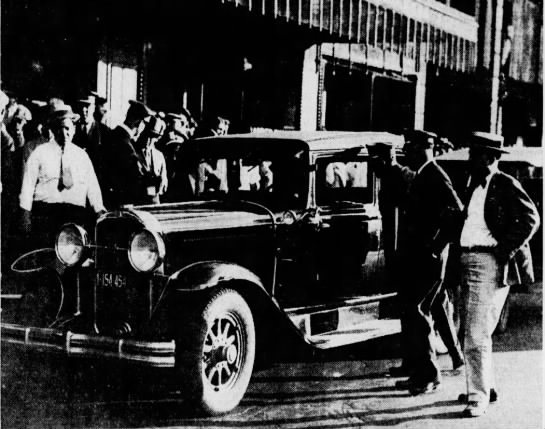
July 3, 1930, found Cannon, Collins and Stitzel shooting pool. The trio left the pool hall and walked to Cannons sedan, which was parked in front of the Lasalle Hotel's entrance on Adelaide Street. As the men walked to the car they noticed two men following them. One poorly dressed, the other in a blue suit and panama hat.

"Who are those guys?" Stitzel asked Cannon.
"I don't know. I've never saw them before," Cannon replied.

At the car, which was parked between a cab and another auto, Stitzel climbed into the back seat. Collins the passenger seat and Cannon behind the wheel. Initial reports stated that, as the latter worked to get the car out of it's tight parking spot, the man wearing the panama hat walked out of the Lasalle and up to the car.

"They dropped Collins first and then Cannon," Stitzel would tell the police, "I knew what was coming so I slumped in the back seat, all doubled up. But they got me anyhow."

 -
Police inspect the death car

The following day however, it was reported the the gunman actually jumped on the running board and swore at Cannon in Italian and shot him before turning the gun on Collins. Both versions ended up with Stitzel getting it last.

Following the shooting, the gunman placed the gun in his pocket and entered the Lasalle Hotel through the Adelaide Street entrance and exited out on Woodward Avenue.

Cannon and Collins were both 28 and each had fifteen arrests under their belts. They each had badges provided by Stitzel and it was believed that they were murdered for shaking down speakeasy owners. Though it was initially reported that gangster Fred "Killer" Burke was possibly the gunman, Stitzel, who said he knew Burke, stated it wasn't him.

Cannon - Collins -
William Cannon                George Collins


Monday, March 16, 2020

Ohio State v Michigan

lahey -

On this date in 1932, a railroad man was walking near the Dixie Highway in Michigan, about a mile and half over the Ohio border when he came upon the body of Toledo gangster, Joseph Lahey. The bootlegger was lying face up with his hands across his chest. He had been shot three times in the head and once in the neck, with a .45. 

Police said that, three days previous, he had hijacked a liquor truck from Cleveland en-route to Toledo. He had been on the spot for a while having dodged two attempts the the previous May. One of which took the life of a confederate named Aaron Harris.

The following year, the Detroit Free Press stated that Lahey was bumped off by Detroit mobster Yonnie Licavoli. Lahey had a total of twelve arrests.

Jimmy Lahey

Friday, February 7, 2020

A Boss Buys It In The Kitchen

lamare2 -

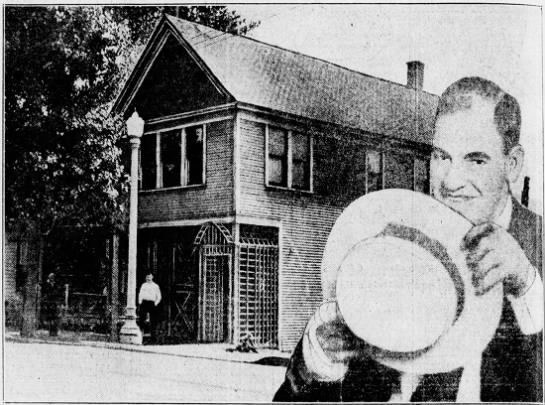
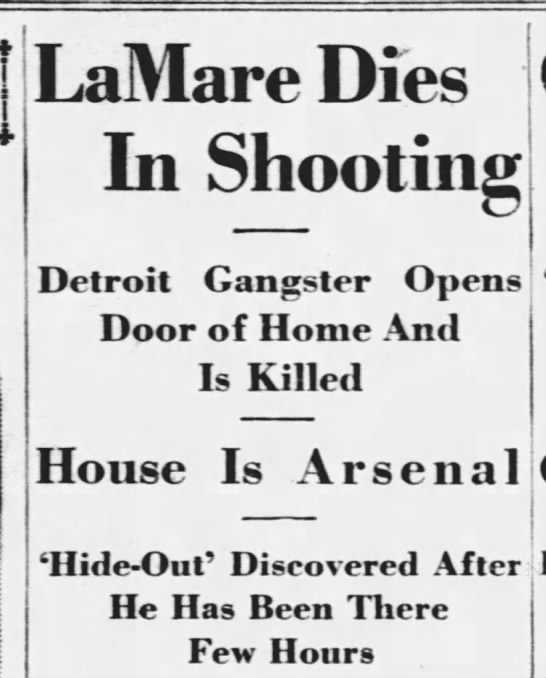
In the wee hours of this date (or possibly the late hours of the previous day) in 1931, Detroit Mafia boss Chester LaMare, known as the "King of Hamtramck" was gunned down in the kitchen of his Detroit home. Having the orchestrated the murder of some rival gangsters, he had been dodging both vengeful gangsters and the law for a number of months.

He returned to Detroit on the evening of February 6, and had a visitor to his house. At around 9:30 that evening, his wife left the house to give the visitor a ride home. When she returned after midnight, she found Chester on the Kitchen floor with two bullets in the back of his head. Since LaMare knew he was a marked man, his house was a virtual arsenal with at least one gun in every room, it was assumed that he killed by a trusted associate.


Image

Chester LaMare

Tuesday, November 26, 2019

Two Purples Expire

November 26, 1933 - Detroit


Eddie Fletcher and Abe Axler died as they lived; Together. Known as the "Siamese Twins" of Detroit's notorious Purple Gang, both Axler and Fletcher grew up together in Brooklyn, New York. Just as Al Capone went west at the dawn of Prohibition to strike it rich, so to did Axler and Fletcher. The latter two ended up in the Motor City in the mid 1920s and became top torpedoes for the organization.

By 1933 the Purple gang was in disarray. Main gang members and former leaders were either dead or in prison. The Siamese Twins reportedly tried to go straight themselves but were unable to make a living. Designated Public Enemies 1 & 2, by Detroit law enforcement, they were also picked up on sight. It was mentioned that Axler had a bookmaking operation working out of a Detroit barber shop. There was also a report that the men were trying to muscle in on the dope racket.

Whatever the reason, the men were taken for a ride in Axler's own Chrysler sedan. They were last seen leaving a beer garden in Pontiac, Michigan. They climbed into Axler's car after midnight and drove off. Somewhere along the lines they ended up in the back seat. Fletcher on the left, Axler in the middle and another guy on the right. Someone else was driving. It appears that Axler saw what was about to happened and grasped his partner's hand. Police believe Fletcher got it first, a fusillade from a .38 from the front driver's seat. He was hit twice in the chest, once in the right arm and once in the forehead. Axler took five shots from a .45 to the ride side of the head. Unrecognizable, he slouched into his dead friend. The car was abandoned on deserted patch of road off of Telegraph Road near Bloomfield Hills.

A couple of days after the murder the Detroit Free Press stated that the Licavoli crime family had made an attempt on them a few weeks before the murder. Axler and Fletcher may have known they were on the spot because they had been spending time outside of Detroit.

L. Eddie Fletcher R. Abe Axler


Wednesday, November 6, 2019

Detroit Vengeance

Sixty-year-old Joe Rivetts, owned a saloon in Wyandotte, Michigan. His town is in the region known as "Down River" because it is south of Detroit along the Detroit River. After years of running his business independently, in the summer of 1931 Detroit mobster Joe Evola came calling and demanded that Rivetts start taking his beer from him. Rivetts refused. Shortly thereafter, hoodlums came and wrecked the place. Rivetts fixed the joint up and reopened.

The reopening was followed with more demands and threats by Evola. Rivetts ignored them leading the Detroit mobster to pay another visit on October 15 with another man, while Rivetts was working behind the bar. Witnesses stated that Evola was cursing Rivetts and then jumped over the bar. As Evola was clamoring over the bar, Rivetts pulled out a pistol and shot him once in the chest, piercing a lung. the Detroit mobster was removed from the tavern and taken to the hospital where he expired a few days later.

Rivetts was arrested for the shooting but let go after it was determined that he acted in self defense. The case brought to much attention to Rivetts who closed his place.

On this evening back in 1931, Rivetts sat at the bar in another saloon reading the paper. Charles Tear, the owner of the place, was tending bar. Another bartender, John Pelletier was also sitting at the bar when at approximately 8:05 three men walked in. One pulled out a shotgun from under his coat and the other two pulled out pistols. Rivetts noticed them first and made a dash for the rear door. A blast from the shot gun took off half his face. He was down. Tear tried to make his way from behind the bar but another shotgun blast removed the top of his head. The guys with the pistols took care of Pelletier. For some reason, another bar tender who was in the room wasn't shot. After the three men were killed the gunmen shot up the bar some and then took off.

 Joe Rivetts                     Charles Tear

Saturday, June 15, 2019

One Bourbon, One Scotch and Three Bullets

6154 -

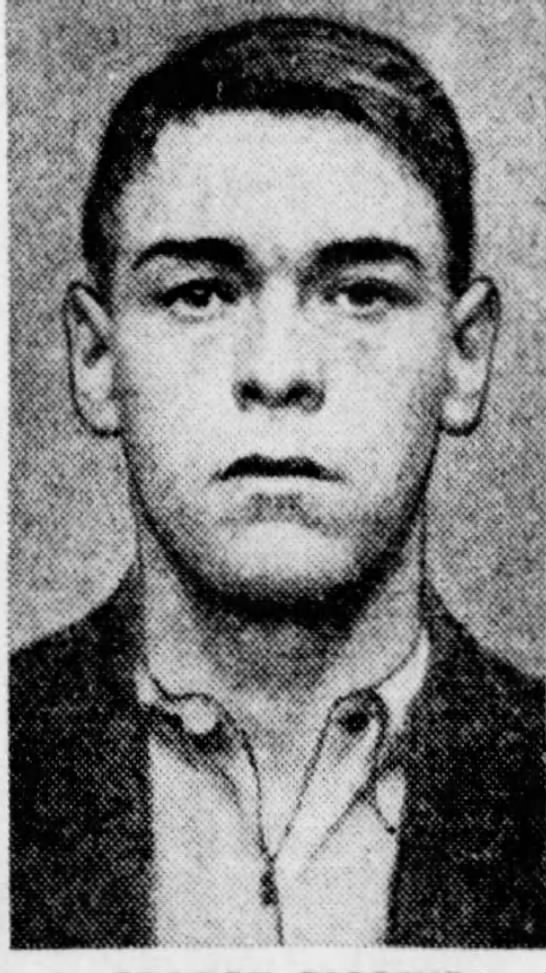
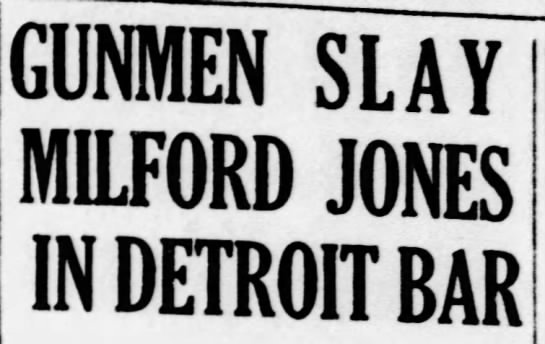
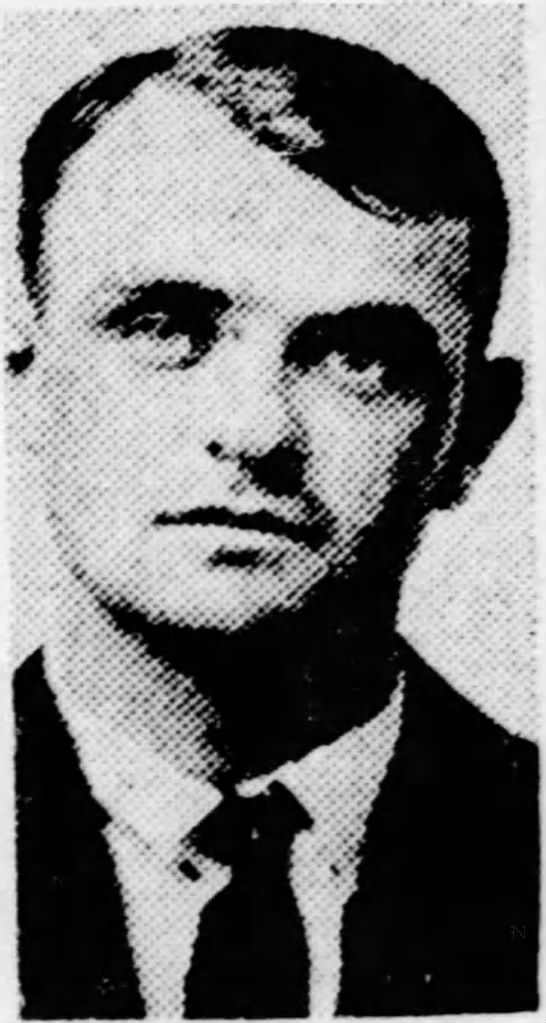
In the early morning of this date back in 1932, St. Louis gangster Milford Jones stood drinking at the bar of Detroit's exclusive Stork Club. Jones speaking with the clubs entertainment, a singing duet known as Tracey and Duncan, when somebody, or somebodies, came up from behind and fired three bullets into his back and head. Tracey, Duncan and forty or so patrons and staff members vacated the club. Jones, sprawled on the floor, his feet entangled in the brass rail, lay by his lonesome for about seven hours before the club's owner decided he should call the police.

Jones was a former member of St. Louis' Cuckoo gang but split with them when his pal Tommy Hayes splintered from the group. From St. Louis he went to Kansas City where he had dealings with a casino, Effects found on his person told police that he had been traveling between Detroit, Cleveland, Toledo, Chicago and Kansas City.

615p -
Milford Jones

Wednesday, April 24, 2019

Pick one


This date in 1929 saw the demise of two Cleveland racketeers. 25 year-old Morris "Skinny" Fuerstman and his partner 43 year-old Isadore Schiller. Both men had long records and were known as shakedown men. They exacted tribute from gambling dens and houses of prostitution. It was also stated that they may have been involved in a kidnapping in Cincinnati and both were involved with a gang in Detroit. Speaking of the Motor City, it was speculated that the two may have been marked for death for hijacking a liquor truck from Detroit.

Whatever the reason, both men were taken somewhere and had their heads were caved in. Someone also drove an ice pick into Fuerstman's head with such force that it took several cops to pull it out. Their bodies were then loaded driven outside of town and dumped in a ditch in Independence Village.

Thursday, March 28, 2019

Go Fish


Frank Wright, a gunman from out west was in his room at the Book Cadillac Hotel in Detroit when he received a phone call. - On the previous Saturday, March 26, 1927, Meyer "Fish" Blumfield, who worked at a gambling resort run by a guy named Charles "Doc" Brady had been kidnapped. It appears that Doc had hired Wright to handle the situation- The caller stated that Fish could be found in apartment #3 at 106 Alexandrine Street. Doc Brady, not wanting to pay a ransom, gave Wright the information.

Wright, together with two other out-of-town gunmen, William Harrison, aka George Cohen and Isaac Reisfeld aka Joe Bloom. headed to the apartment. The trio entered the building. Apparently the kidnappers were on guard for just just such a trick because as the men were in the hallway approaching apartment 3, a machine gun erupted and the men, riddled with bullets, fell to the floor. Harrison and Reisfeld were killed outright while Wright lingered for a day or so before succumbing to his wounds.

After that, Doc Brady saw things differently. The ransom was paid and Blumfield was released within a few days.

Thursday, December 10, 2015

Two dead guys and a partridge in a pear tree

Was on this morning in 1928 when some early birds came to an intersection in Chicago Heights and found...a magic hat which they placed on a snowman who miraculously came to life...just kidding, it wasn't a magic hat they found but a dead body with four bullets in the head and neck.

Now I feel bad.

Here you were thinking you were going to be treated to a nice holiday story and I talk about dead gangsters...let's try again shall we? While Chicagoans were trying to figure out who was blocking their intersection on this date back in 1928, about four hundred miles away in Mount Clemens, Michigan, a trucker was hauling produce to Detroit when something off to the side of the road caught his eye. He put on the breaks. Jumping to the road he ran up and found a magic hat. He put it on the nearest snowman who then began to dance around....ok, I lied again. He didn't find a hat it was dead gangster who had been shot and then his body lit on fire.