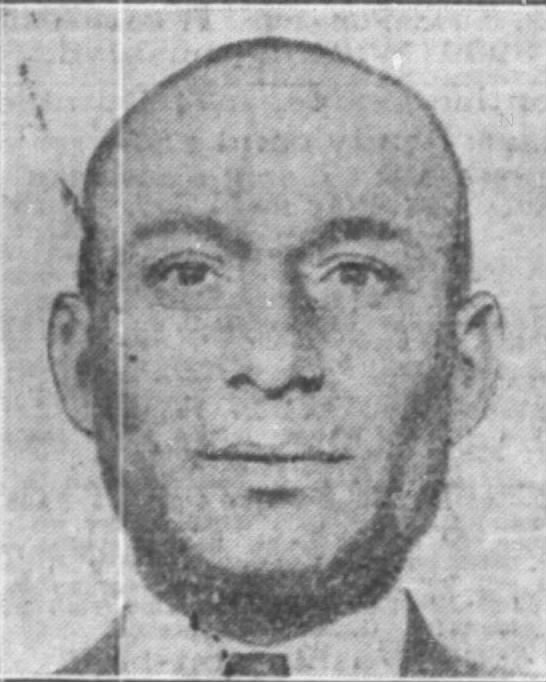
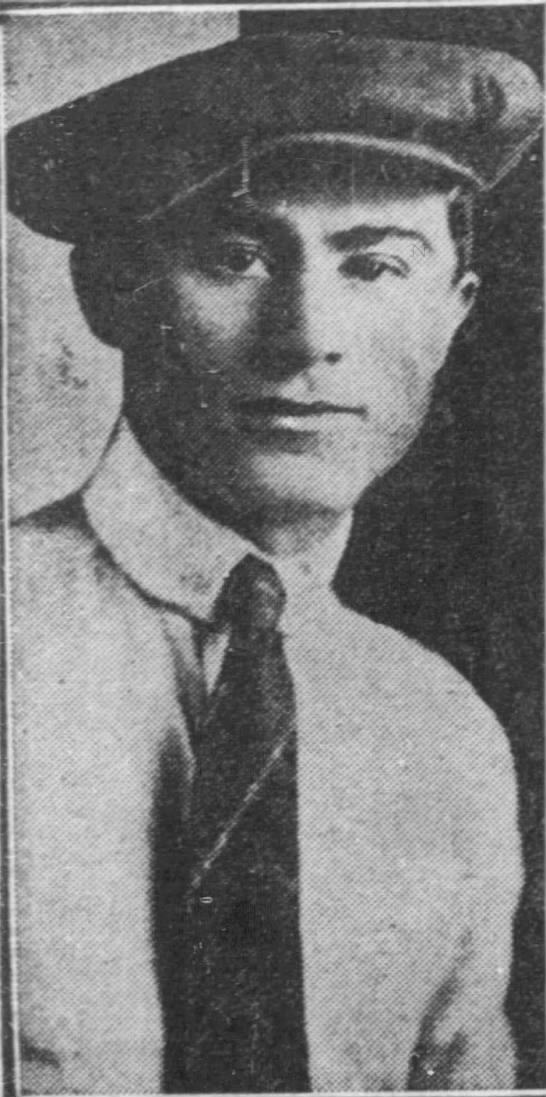
"He must have done something. They don't kill you for nothing." - Chicago Gangster Ted Newberry. Rubbed out January 7, 1933
Showing posts with label Chicago. Show all posts

Tuesday, July 6, 2021

By Person Or Persons Unknown


James "Red" McGee was a former Chicago cop (he quit the force in 1927) who made a failed attempt to become an alderman. The summer of '32 found him as proprietor of the Del Rio Cafe; a speakeasy he purchased a month previous, just across the Chicago line in Evergreen Park. 

On the evening of July 6, 1932 McGee stood at his bar with an associate named Bernie Larkin. Larkin was known as a former member of Ralph Sheldon's gang. He also had a brother named Thomas "the Goat" Larkin, a one time member of Spike O'Donnell's mob. 

As McGee and Larkin stood together, two men entered the establishment. One carrying a shotgun the other a handgun. "Hello Red," one of the men said. As McGee turned to see who called him, the gunmen opened fire. McGee and Larkin dropped to the floor dead. 

According to McGee's wife Margaret, who worked as a cashier at another roadhouse, Red knew he was on the spot but she didn't why. She mentioned that earlier she told Red that she would pick him up around 1 o'clock that evening and drive him home. "No Peggy, you'd better not. I'm hot."

A subsequent search of the premises showed that, in addition to owning the Del Rio, McGee had also been financial secretary for the defunct Cemetery Workers Union.  Police chalked the murder up to McGee failing to buy beer from the right vendor. The investigation was closed the following day with the verdict of murder by person or persons unknown.

  
James "Red" McGee
                  
Bernie Larkin


Thursday, March 11, 2021

Lefty Leaves the Underworld


Frank "Lefty" Koncil was a top man in the Saltis-McErlane gang, one of the premier gangs of Chicago's Southside. In the fall of 1926 Koncil and Saltis were put on the trial for the murder rival gangster John "Mitters" Foley, an associate of Saltis and McErlane's chief rival Ralph Sheldon. Frank McErlane was also dealing with a murder trial at the time. In early November both Saltis and Koncil were acquitted but the trials of the three executives took a toll on business. With their legal troubles behind them, the gangsters began to make up for lost time.

"We're down. We're broke," Koncil told detectives in early March of 1927, "But we won't stay that way. We're going to get back what we used to have. We won't be pushed around any more. And if anybody gets in the way, we'll take care of him."
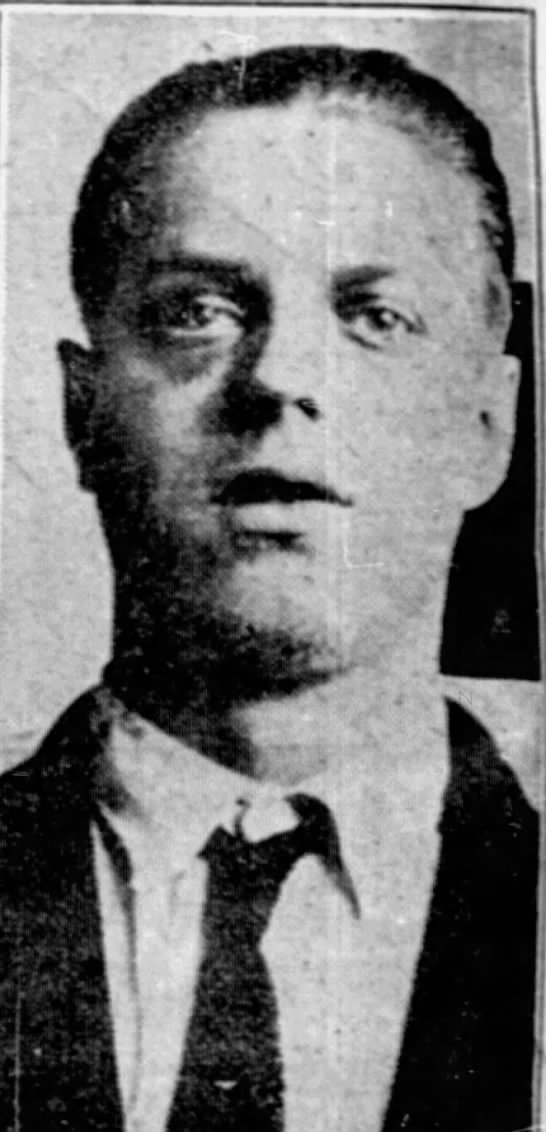
On the night of March 11, Less than a week after making those statements at the detective bureau, Koncil was in Saltis's sedan along with gang member Charles "Big Hayes" Hrubrek. It is believed that they had just exited a saloon where they were informing the proprietor that they were back in business. At about 11:45 pm, witnesses saw the Saltis car come flying around a corner followed by another sedan. The second car pulled up alongside the first and the shotguns went off. 

Koncil stopped the car and both he and Hrubrek hit the pavement. Another volley was fired and the latter, mortally wounded, fell face first to the ground. Koncil too collapsed. More shots were fired at him. After a few moments he got up and staggered a few few feet before dropping dead.

Frank "Lefty" Koncil      Charles Hrubek      


Sunday, March 7, 2021

The Bad Pope


Erneste Mazzoni better known as, "West Side" Frankie Pope was a Chicago hoodlum who was sent to Leavenworth prison in mid 1931 for violation of the Prohibition Act. Released in November of 1933 Pope, who added the West Side to his name to distinguish himself from the more infamous North Side Frankie Pope, had a small racket going where he would take money from family members of Leavenworth prisoners to help get them paroled. Only problem was, he didn't do anything for them after taking the money.

This was the reason anyway that police gave after two men entered his hotel room on the morning of March 7, 1934 and blasted him into eternity. According to witnesses, Pope returned to his room that morning and a short time later to men entered the hotel. They called up to his room and after a brief discussion went up.

Once they were in his room for a few minutes, a cleaning woman heard lady scream, "My God! Don't do that!" This was followed by about ten shots. All of which hit Pope. Hearing the shooting, the desk clerk called the cops but the gunmen and the woman were gone before they arrived.

It was while searching Pope's room that detectives came across the list of prisoners and their families. On the list were two notorious bank robbers and killers; Thomas Holden and Francis Keating. Perhaps Pope double crossed them in some fashion and they had him knocked off.

Six hours later another West Side hoodlum, Daniel Losce sat in his car smoking a cigarette when another car pulled up and let loose a barrage of gunfire. Losce slumped over dead. The dead man had a record dating back to 1922 including an arrest for murder. Back at his house, police found a small arsenal. Interestingly, he was a suspect in the 1928 Evergreen Park mail robbery which resulted in the theft of $133,000. This job was pulled by a gang headed by Thomas Holden and Francis Keating. This link had police wondering, was Losce working with Pope? Or was it simply a coincidence that they both were bumped off on the same day?


                                           West Side Frankie Pope        Daniel Losce                           

Friday, March 5, 2021

Dingbat Goes for a Ride


John "Dingbat" Oberta was a hoodlum who rose through ranks on Chicago's Southside. Along with crazy man Frank McErlane, he was part of gang leader Joe Saltis's executive board. In addition to bootlegging, Oberta dabbled in local politics as well. 

By 1930 Saltis was in exile in Wisconsin and it appears that his two cohorts, Oberta and McErlane couldn't get along. In February of that year, McErlane showed up at the hospital with a bullet wound to the leg. Most likely fired by his wife during a fight. On the evening of February 24, McErlane lay in bed recuperating; his leg up in traction. At about 9 p.m. two men entered his room and opened fire on him. 

McErlane prepared for just such an emergency. Pulling out a .45 from under his pillow, the gunman returned fire. Though hit three times, McErlane managed to scare of his would be killers. When questioned by the police as to who the invaders were McErlane is reported to have said:

"Look for them in a ditch. That's where you will find them...McErlane takes care of McErlane"

The next day, McErlane was released and taken to his parents house to recover from his wounds.

About a week later, on the evening of March 5, Dingbat Oberta called his wife at about 7 p.m. from their florist shop and told her of his evening's plans. Two and a half hours later, a cop found Oberta's Lincoln off the road in a ditch. Inside on the passenger side was Dingbat with what appeared to be a shotgun wound to the back of his head. Outside submerged in the icy water of the gully was Oberta's bodyguard and chauffer, Sammy Malaga. He had been shot a number of times before being tossed in.  

It appears that McErlane took care of things.


John Dingbat Oberta     Sammy Malaga     


Strawberry Fields For Horton


 "Orlando Jack" Horton was a Chicago hoodlum who fled the Windy City in 1924 when his bootlegging partner, John Duffy, was bumped off. He and his wife were picked up a few days later in New Orleans but no evidence could be found to link him to the crime.

With Chicago being to hot for him, Horton set up operations in Lafayette, Indiana. He was arrested for selling drugs and did about three years in Leavenworth. In mid-August 1929, Lafayette firefighters were called to burning home. After dousing the flames they came across a "monster" still and evidence of a large bootlegging enterprise. A search showed that the house belonged to a Robert Horat. Detectives soon found out that Horat was in fact, Orlando Jack Horton and he was arrested. 

Perhaps, coincidently, the following day, a number of Lafayette speakeasies were raided. After being charged with violating Federal Prohibition laws, Horton was scheduled to appear in court on March 17, 1930 and released on bail. He never made it to court.

On March 5, 1930 Horton's body, with five extra holes in it,  was found face down in a strawberry patch on the outskirts of Lafayette.


Orlando Jack Horton


Thursday, January 7, 2021

They Didn't Kill Him For Nothing


"He must have done something. They don't kill you for nothing." This was the response that Chicago gangster Ted Newberry gave to police whenever questioned about a gangland murder.

Like those he discussed before him, Newberry too went for a one-way ride; his took place on January 7, 1933.  A product of Chicago's Northside, Newberry got involved with bootlegging in the early days of Prohibition. He muscled his away into the taxi racket and was pals with fellow racketeer Eugene Red McLaughlin during the days of the taxicab wars.

As the Roaring Twenties came to an end, Newberry was allied with George Bugs Moran and his Northside gang. In fact, Newberry narrowly missed being a victim of the St. Valentine's Day massacre as he was with Moran that morning. When they saw the rival gangsters (dressed as police) enter the gangs' headquarters, they dodged into a coffee shop assuming that it was a raid.

"He must have done something."

So what did Newberry do? In the early 1930s Moran was out of the picture and Newberry was allied with Al Capone. After Capone was sent to prison however, Newberry's relationship with Frank Nitti began to fall apart, his response was to have Nitti bumped off. A raid was set up in the latter's office in December of 1932 and Nitti was shot by a cop, but survived. After a few weeks recovery, Nitti figured out who was behind the botched raid and Newberry was removed. His body was found on a lonely stretch of road in Indiana.

Ted Newberry


Saturday, November 7, 2020

Go Fish


Twenty-four-year old Chicago hoodlum Richard Fishman was suspected in three murders, including that of another small timer named Herman Horwitz.

Around the beginning of November 1931 Fishman entered a cigar store and made his way to the gambling parlor located in the rear. Once inside, he stated to all there, "From now on, I'm the boss around here." To drive the point home he pulled out his pistol and fired three shots into the floor.

A week later on November 7, Fishman was in the parlor shooting dice with another guy when a "tall, heavy set man." walked in and did some shooting of his own. When the smoke cleared, a gambler was wounded but Fishman was dead. He was no longer boss around there.
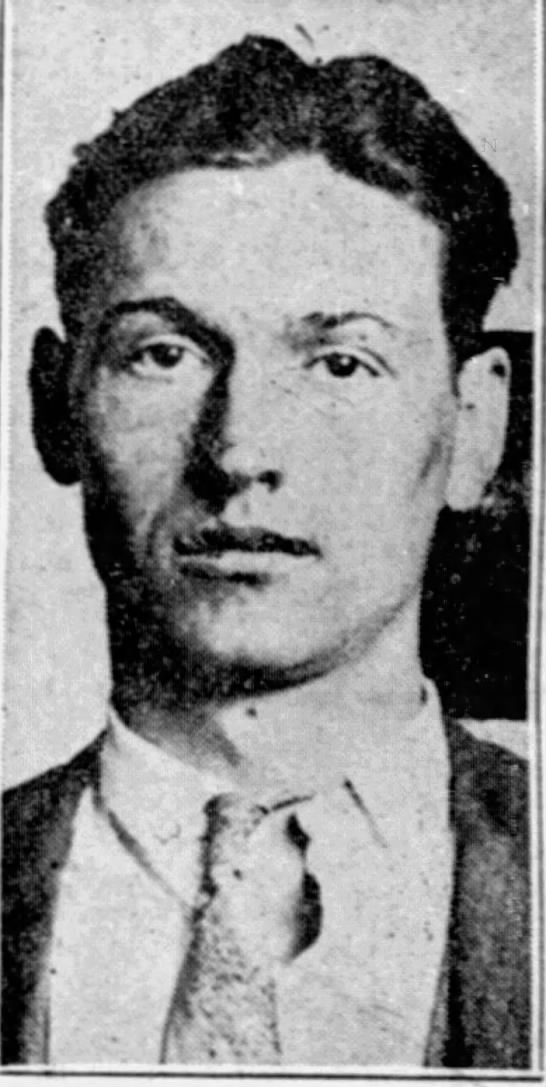
Richard Fishman


Sunday, October 18, 2020

Northwest Passage


Matt Kolb was described as the Czar of crime on Chicago's northwest side and the northwest portion of Cook County. He grew to prominence in 1927 when his former business associate, Charles Graydon, became sheriff. As the sheriff's man, he was able to collect tribute and dole out favors. After Jack Zuta was shot to pieces in 1930, amongst his records were notations regarding payments made to Kolb.

One Capone biographer states that Kolb's enterprise was basically a subsidiary of Capone's organization. Another states that he was an independent whom Capone told to get out and stay out or else. Judging by the description of his murder it appears that he didn't fear his killers.
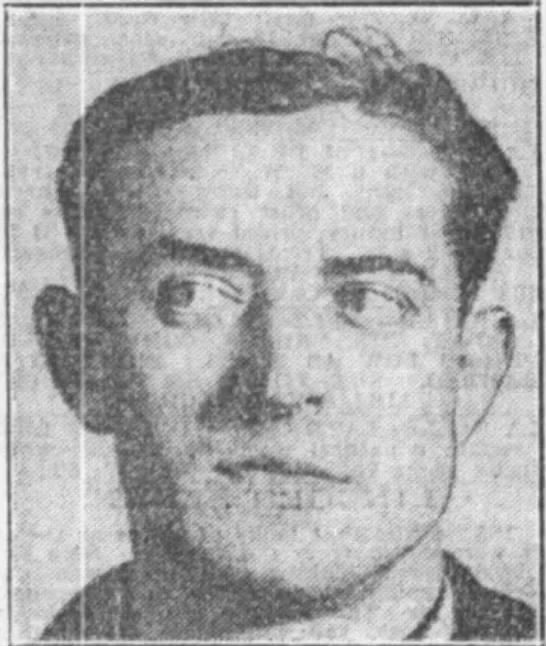
On October 18, 1931, the day after Capone was sentenced to prison, two men entered Kolb's resort, the Club Morton, located in Morton Grove. They brushed by the doorman stating that they "wanted to see Matt." Kolb was stationed near the dance floor by a door. They approached him and one of the guys said, "Hello Matt." and extended his hand. Kolb shook hands with him. The man said something which made Kolb chuckle and lean in closer. As this happened the other guy pulled out a pistol and shot Kolb a number of times in the head.

Kolb fell to the floor and the men started to leave. After a few steps the gunman said, "I'd better make sure." and went back and pumped another shot into Kolb. The two men walked out. Witnesses told police that the room was too dark and that they couldn't identify the men.


Matt Kolb

Tuesday, October 13, 2020

Argonaut


Chicago hoodlum Edward Lattyak was described as bandit and possibly a member of the gang headed by Henry "Midget" Fernekes. On October 12, 1925 his bullet riddled body was found on State road outside of Chicago near the town of Argo. He had been taken for a ride and tossed from a car. Police failed to connect him to any of the bootlegging gangs so chalked his murder up to revenge of his fellow gunmen. Revenge for what wasn't speculated. Lattyak had served time in both the house of corrections and Pontiac reformatory. He had been arrested several times for robbery but managed to beat the rap.


Ed Lattyak

Monday, October 12, 2020

Drainage Trouble


James Quigley was a southside saloon keeper who was said to be a one-time member of Spike O'Donnell's gang. He had recently splintered off and formed his own gang. This move put the 45-year old former railroad man at odds with both O'Donnell as well as the Saltis-McErlane gang. It was believed that Quigley had killed McErlane's chauffer George Fitzgerald.

On October 12, 1931 Quigley was found floating in a drainage canal about thirty miles south of Chicago in the city of Lockport with a bullet in his head. The murder was credited to McErlane.


James Quigley


Friday, October 9, 2020

Should've Hopped On The Bus, Gus


October 9, 1933 saw the demise of Chicago hoodlum, Gus Winkeler. Originally from St. Louis, Winkeler spent the better part of the 1920s robbing banks around the country. By the late Twenties he and his confederates were killers for hire in the employ of Al Capone. Known as Capone's "American Boys" Winkeler and his cohorts took part in the 1928 murder of New York kingpin Frankie Yale as well as the 1929's infamous St. Valentine's Day Massacre, in which seven Northside gangsters were mowed down with machineguns and shotguns.

Over the years Winkeler rose in the Capone gangs' ranks and by 1933 was running a lucrative nightclub and other ventures on the Northside. He was good friends with another hoodlum named Ted Newberry who tried to take out Frank Nitti and ended up going on a ride himself. The syndicate was bit wearing of Winkeler after that but didn't make a move. 

Because of his former bank robbing exploits, the FBI, which was gearing up for its war on crime, started questioning Winkeler on a regular basis. With Capone behind bars, Nitti and his cohorts decided that Winkeler was a liability. As he was leaving a beer distribution plant, two men with shotguns cut him down.


Gus Winkeler

Tuesday, September 29, 2020

Iron Man


In the early hours of September 29. 1932, Aaron "Iron" Barger's bullet-riddled corpse was found in an automobile on Chicago's south side. What constitutes riddled? Nine bullets in the head and body. He was also tortured before giving up the ghost. Unlucky him.

Barger was a suspect in the Evergreen mail robbery from 1928. His brother's garage was used as a hide-out for the bandits. We are told that Barger turned states evidence, and was exonerated while the two masterminds of the job, Frances Keating and Tommy Holden were sent to Leavenworth.

Who riddled Barge? Police speculated that his torture and death were a result of his attempting to muscle in on the Southside beer racket, which at the time was the battle ground for the Spike O'Donnell and Danny McGeoghegan gangs. It was also mentioned that he was involved with a ring of auto thieves and may have had a falling out.


Aaron "Iron" Barger


Monday, September 14, 2020

Jack On The Spot

Jack Costa AKA Angelo Spano was, depending on which paper you read, either a member of the Northside Moran gang or was a with Joe Aiello, a Moran ally at the time. Since Aiello was at war with Capone at the time chances are Costa was aligned with the latter.

The New York Daily News stated that Costa was a transplant from Brooklyn. In Chicago, it was reported that Costa owned a number of cabarets that used Moran booze and beer. The details behind his demise are a bit murky. He was living in an apartment with his 23-year old girlfriend Margaret Reardon. According to Reardon, she threw party that she didn't want Costa to attend so rented a room for him and a confederate of his named Fred in the same complex for the evening. After the party, in the wee hours of September 14, 1930, Reardon called Costa in the room and told him the party was over and he could come back. Costa left the the room and as he was crossing the courtyard, he was cut down by shotguns fired from the apartment above the one he had just vacated. He died later that day.

Jack Costa


Wednesday, September 9, 2020

42 Skidoo

  -

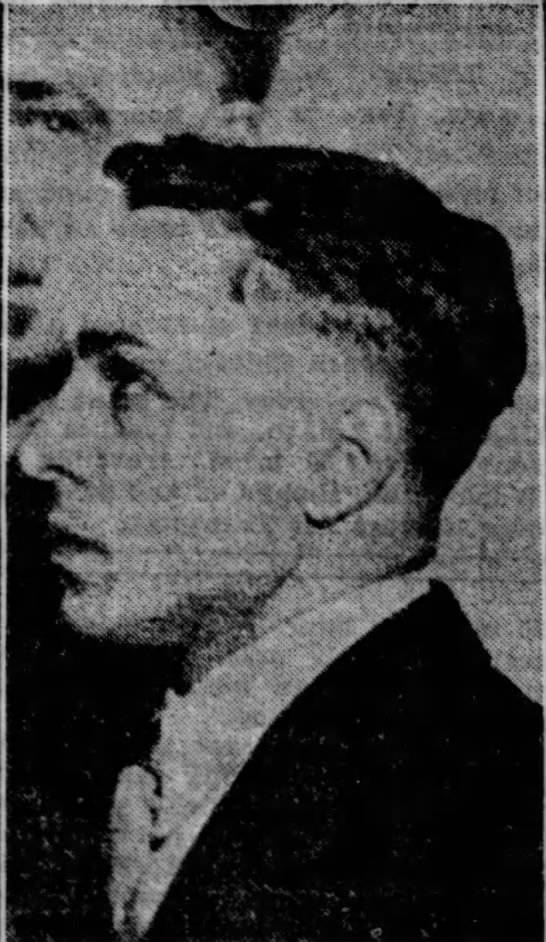
September 8, 1933 saw the demise of Nicholas "Little Man" Muscato, so called because he stood at five feet tall. Muscato was a small time racketeer for Chicago's 42 gang. He reportedly had a bootlegging route under the tutelage of gangster Joseph Red Bolton, or, as was also reported, Bolton paid Muscato protection money.

In 1930, Muscato, along with fellow hoodlum Peter "the Ape" Nicastro, had murdered fellow 42 gangster Frank Petito, who hijacked a truck belonging to Bolton. After the murder, Nicastro claimed he had done the killing himself. To save face, Muscato in turn took Nicastro for a ride but he survived. Subsequently Nicastro squealed on Muscato who was arrested but beat the rap.

As a taxi driver  sat parked at a local hospital, he saw a sedan pull up and slow down. A door was opened and Muscato was tossed to the sidewalk with a bullet in the back of his head. Being a good sort of fellow, the taxi driver dragged the gangster into the hospital where he was informed that his labors had been in vain as Muscato was already dead.

Nicholas Muscato -

Nicholas Muscato

Monday, September 7, 2020

Opening Salvo

Jerry O'connor -

By 1923, Chicago gang lord John Torrio had the city carved up nice and neat so all the gangs could serve their fiefdoms with beer and alcohol and nobody would war with anyone. All would get rich. Then South Side gang leader Spike O'Donnell came home from prison. 

Basically left out of the fray, the O'Donnells', or Spike really, decided that they had to make their own way so started encroaching on bars in and around their bailiwick and forcing their beer on them. September 7,  O'Donnell gang making "sales calls" on unwilling tavern keepers. The beer that the recalcitrant barkeeps were then purchasing was coming from either John Torrio or his allies, the Saltis-McErlane gang. 

One bar in particular that day had turned the gang down once. This time when they said "No" O'Donnell gangsters attacked the owner and his bartender busting both of their heads. After that, they visited about five other establishments before heading back to a saloon in the safety of their own neighbor hood.

As they sat back drinking beer, eating sandwiches and patting themselves on the back for a hard days work, the door swung open and rival gunmen entered. Not ready for a battle the O'Donnell's headed out the back door. Contemporary newspapers state that O'Donnell gunman Jerry O'Connor was brought down with a rifle shot to the heart. His gang mates then piled him into a car and took him to doctor where he was announced dead. Capone biographies tell a different story. The later accounts stated that O'Connor was trapped inside the bar and made to walk out the front door where gangster Frank McErlane was waiting with a sawed off shotgun and proceeded to blow his head off. Thus began what became known as the Chicago Beer Wars

Team Members Archive | Hillsboro Aero Academy

Jerry O'Connor

Saturday, September 5, 2020

Sighs for Cy

cawley -

Frank "Cy" Cawley was a Chicago hoodlum who made his way by hiring out for killings or robbing other underworld sorts of their ill-gotten booty. Police stated that he was implicated in three shootings, two bombings and at least thirty hold-ups. He was also a member of the "Four Horseman" gang. A gang that had been thinned out over the course of the year by gangster bullets.

On September 5, 1929 the bullet riddled bodies of Cawley and William McElligott (There seemed to be some confusion over the true identity of McElligott. He was also identified as Edward Westcott. Other papers said he was the brother of Thomas McElligott, a Cawley confederate who was killed the previous May.) were found in Jacob Riis park. Sawed off shotguns and pistols seemed to be the tools used by their killers. The $6000 robbery of a dice game was given as the reason for the murders, however another theory given was that one of the gang members had killed a man in a saloon earlier in the year. Though the man wasn't a gangster he had a friend who was, and that friend took it upon himself to eliminate the whole gang.

A note worthy aspect to the crime was that both Cawley and McElligott each had a nickel placed in their hands after death. Chicago gangland lore dictates that this was a custom of Capone killer Machine-gun Jack McGurn. The story goes that if he considered his victims as cheap hoods he would press a nickel into their palms.

Cy Cawley -edward westcott -

         Cy Cawley       William McElligott

Wednesday, September 2, 2020

The South(side) Pole

 -

Twenty-seven year old Chicago gangster Walter Zwolinksi, nick-named the "Terrible Pole", was a former member of Spike O'Donnell's South Side gang. He started his career as a car thief and entered gangland under the tutelage of Frank McErlane before changing allegiances and joining the O'Donnells. 

By 1932, Zwolinski outgrew the O'Donnells. In spring, Spike's brother Charles was bumped off and there were attempts made on Spike. It was also stated that Zwolinski and two other defectors approached Spike on the the street and told him he was through. In an attempt to save his own skin, Spike headed to Califorinia for his health.

With Spike out of the picture, Zwolinksi allied himself with the McGeoghegan - Bubs Quinlan gang. Since this was his third known change in allegiance, the underworld to refer to him as boss of the switchmans union.

Chicago gang leader was a precarious position back then and Zwolinski's tenure was cut short in the early minutes of September 2, 1932 (or possibly the last minutes of the first.)

Whether or not it was Spike O'Donnell's loyal minions or not isn't known but somebody fired a shot into the back of Zwolinksi's head, trusted up his body and tossed him into the tonneau of an automobile and abandoned him a few blocks from his home.

Walter Zolinski -

Walter Zwolinski

Monday, August 31, 2020

Patty Cake, Patty Cake Bakers Man

 -

Charles Argento had been out of Leavenworth for about six months when he moved into the Hotel Picadilly on Chicago's South Side early in the summer of 1932. The reason for his incarceration was that he was part of large northern Illinois and southern Wisconsin whiskey ring. When he got out of prison he formed the Italian Master Bakers association, collecting dues from the numerous bakers in the city. 

At about noon on August 31, he called his brother in-law, who happened to be the bookkeeper for the union and told him to come to his room with another associate to discuss some bakers who weren't paying their dues.

As the two men arrived they noticed the door to the neighboring room was open, but thought nothing of it. They knocked on Argento's door and after announcing themselves Argento opened the door. As the men entered, Argento noticed a man coming up from behind them. "You better scram; it looks like you'll be killed," he yelled. Immediately after that the bullets started to fly. His two cohorts hit the deck as four bullets plowed into Argento's body.

The killer escaped through the hotel as Argento's cronies went down the fire escape. After walking around town for about an hour Argento's brother in-law went to the police to give his story.

Charles Argento -

Charles Argento

Saturday, August 22, 2020

Good Morning!

 -

About three weeks after Benny Zion, election day terrorist employed by 20th ward "politician" Morris Eller was bumped off, another of Eller's minions, Leigh di Bimardo (spelling of his name varies) was put on the spot.

Like Zion, di Bimardo was said to be an accessory in the election day murder of Eller's political rival Octavius Grandady. Authorities stated that d Bimardo was wanted by a special grand jury conducted to investigate election day terrorism and it was presumed that gangsters afraid of what di Bimardo might say silenced him forever.

According to the dead man's wife, two men showed up at di Bimardo's house at seven on the morning of August 22, 1928 and they left in di Bamardo's car. Two hours later, a number of people who worked near a railroad via duct heard numerous shots. When they investigated, they found di Bimardo slumped over the steering wheel; one arm on the wheel the other hanging out the window. He had been shot numerous times in the head. The killers left their guns (but took the canoli) and made a get away.

 -  

Leigh di Bamardo

Friday, August 21, 2020

Mule Kick

 -

Like his brother Sam, who was bumped off in April of 1932, Leo Mule, 55, said to have been a veteran of the Capone-Aiello war, was mixed up in illicit alcohol. Known as both a bootlegger and proprietor of a beer flat, Leo was driving his expensive sedan on August 21, 1933 with a guy in the passenger seat. Mule was driving slowly when his passenger pulled out a gun and let him have it in head. Mule slumped over the wheel as the car slid into a curb. His job complete, the killer jumped from Leo's car and hopped into another that had been following them and was whisked away.

Team Members Archive | Hillsboro Aero Academy

Leo Mule