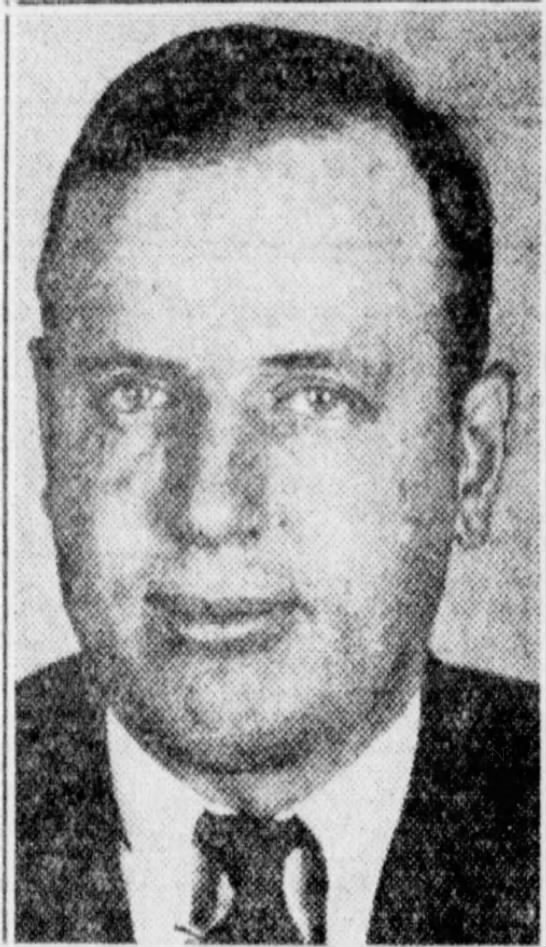
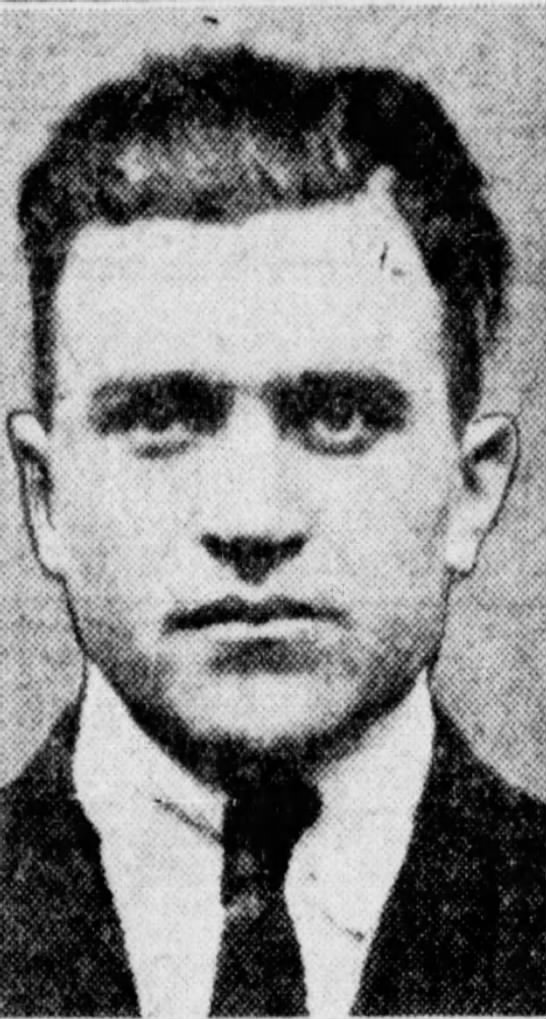
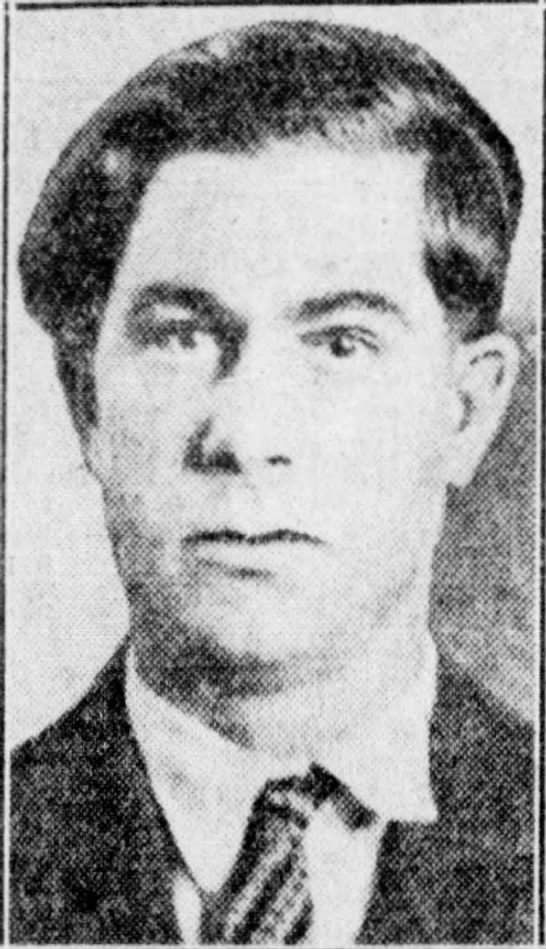
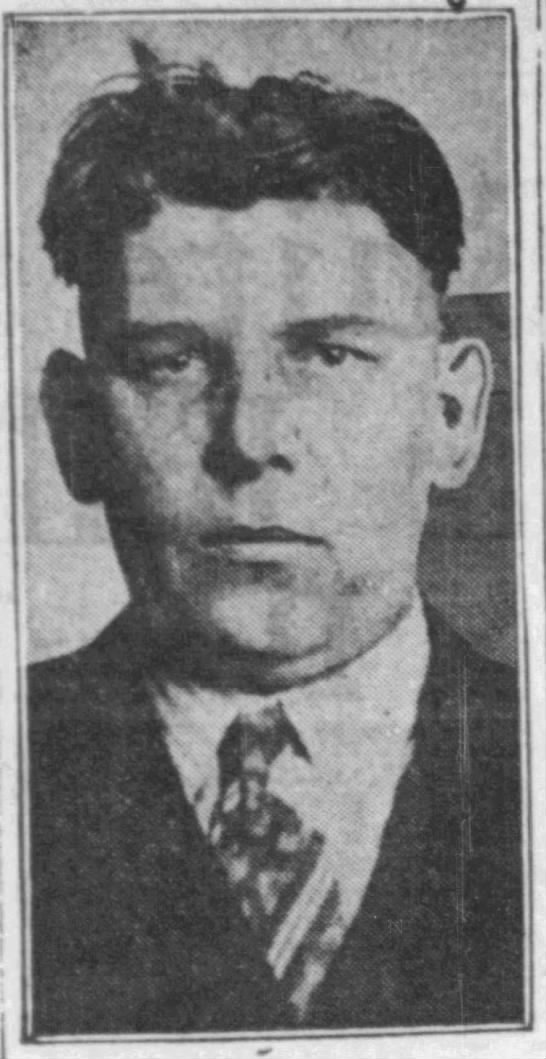
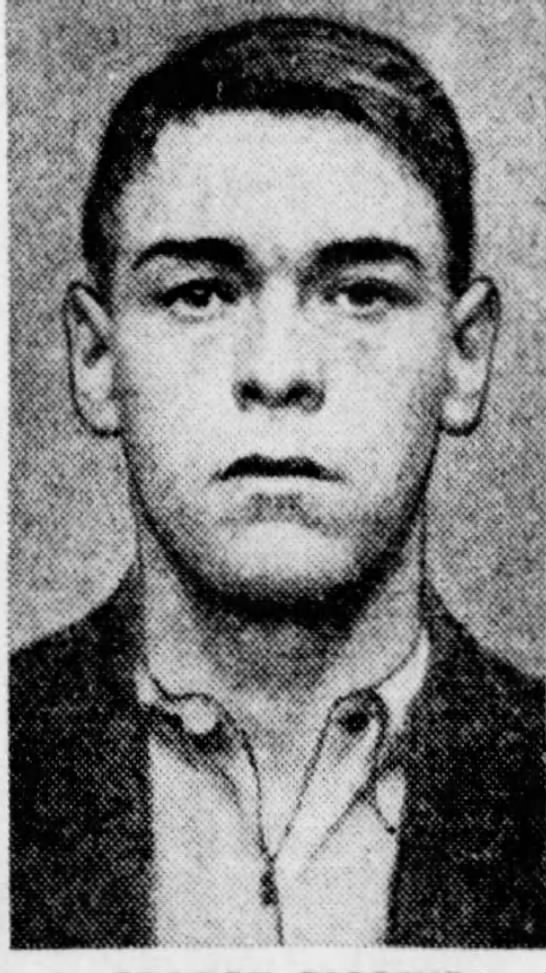
"He must have done something. They don't kill you for nothing." - Chicago Gangster Ted Newberry. Rubbed out January 7, 1933
Showing posts with label 1930. Show all posts

Friday, March 5, 2021

Dingbat Goes for a Ride


John "Dingbat" Oberta was a hoodlum who rose through ranks on Chicago's Southside. Along with crazy man Frank McErlane, he was part of gang leader Joe Saltis's executive board. In addition to bootlegging, Oberta dabbled in local politics as well. 

By 1930 Saltis was in exile in Wisconsin and it appears that his two cohorts, Oberta and McErlane couldn't get along. In February of that year, McErlane showed up at the hospital with a bullet wound to the leg. Most likely fired by his wife during a fight. On the evening of February 24, McErlane lay in bed recuperating; his leg up in traction. At about 9 p.m. two men entered his room and opened fire on him. 

McErlane prepared for just such an emergency. Pulling out a .45 from under his pillow, the gunman returned fire. Though hit three times, McErlane managed to scare of his would be killers. When questioned by the police as to who the invaders were McErlane is reported to have said:

"Look for them in a ditch. That's where you will find them...McErlane takes care of McErlane"

The next day, McErlane was released and taken to his parents house to recover from his wounds.

About a week later, on the evening of March 5, Dingbat Oberta called his wife at about 7 p.m. from their florist shop and told her of his evening's plans. Two and a half hours later, a cop found Oberta's Lincoln off the road in a ditch. Inside on the passenger side was Dingbat with what appeared to be a shotgun wound to the back of his head. Outside submerged in the icy water of the gully was Oberta's bodyguard and chauffer, Sammy Malaga. He had been shot a number of times before being tossed in.  

It appears that McErlane took care of things.


John Dingbat Oberta     Sammy Malaga     


Strawberry Fields For Horton


 "Orlando Jack" Horton was a Chicago hoodlum who fled the Windy City in 1924 when his bootlegging partner, John Duffy, was bumped off. He and his wife were picked up a few days later in New Orleans but no evidence could be found to link him to the crime.

With Chicago being to hot for him, Horton set up operations in Lafayette, Indiana. He was arrested for selling drugs and did about three years in Leavenworth. In mid-August 1929, Lafayette firefighters were called to burning home. After dousing the flames they came across a "monster" still and evidence of a large bootlegging enterprise. A search showed that the house belonged to a Robert Horat. Detectives soon found out that Horat was in fact, Orlando Jack Horton and he was arrested. 

Perhaps, coincidently, the following day, a number of Lafayette speakeasies were raided. After being charged with violating Federal Prohibition laws, Horton was scheduled to appear in court on March 17, 1930 and released on bail. He never made it to court.

On March 5, 1930 Horton's body, with five extra holes in it,  was found face down in a strawberry patch on the outskirts of Lafayette.


Orlando Jack Horton


Sunday, November 22, 2020

Cuckoos Get Two Birds


Lester Barth and Dewey Goebel were former Cuckoo gang members who sided with Tommy Hayes when the latter split with the St. Louis gang. It is believed that the duo were responsible for the deaths of some of their former gang mates.
Like most men of their ilk, Barth and Goebel met a violent death. On November 22, 1930 both men had just exited a grocery store they visited nearly every day at the same time (a fact no doubt known to the Cuckoo gunmen in the Hudson sedan that was following them) and, after loading the groceries into Goebel's Ford couple, the duo pulled away.
As they drove along, the Hudson, containing four or five men, pulled up along side of them and three of the men, each armed with a Thompson machine-gun, opened fire.

Bullets ripped into the coupe and crashed through the rear window. The groceries exploded as bullet after bulled poured into the car. Hoping to lose their pursuers, Goeble turned onto a side street, but the gun men made the turn as well, continuing to fire their weapons. After a couple of blocks Goebel jumped the curb and came to a stop as the Hudson continued.

Witnesses approached the coupe and pulled the duo, both of whom had bullet wounds to the head, from the car. Both died later at the hospital. A search of their homes turned up a Thompson machine-gun, two pistols and ammunition in the coal bin of Barth's house.


L. Lester Barth     R. Dewey Goebel

The death car


Sunday, November 8, 2020

Pain In The Leg


Jimmy Cox had already lost an arm to gangster bullets. On November 8, he almost lost a leg as well. The gangster had just left a funeral home where he paid his final respects to fellow hoodlum James Darmondy who himself had survived a machine-gun attack that took the lives of two of his comrades back in 1928.

Darmondy was rubbed out on November 5, after a run in with a cop. Cox visited the funeral parlor and left at...well, I'll just let him tell the story: "I left the undertakers about midnight...and started to drive east. I had just started when a large car with three fellows in it came up the street, and one of them started firing with a machine-gun."

Three of the bullets ripped into Cox's leg but he managed to get to a hospital with the help of a friend. Though he survived this attempt, he had a date with destiny a few years later.


James Wingy Cox


Tuesday, November 3, 2020

Grape Ape


On November 3, 1930 Newark, New Jersey gangster Dominick "The Ape" Paselli, said to have ties to Newark mob boss Richard "the Boot" Boiardo, walked into Newark General Hospital with a slight scalp wound. He claimed that he had an accident but in reality, his head had been creased by a bullet; he was on the spot.

The staff patched him up and told him he could go. "No, if it's all right with you, I think I'll stay here a couple of days." He told them. He was given room thirty-three where he received two male visitors, around three o'clock that afternoon. After a short visit, they left.

A few minutes after six that evening, two men entered the hospital and, accounts vary, some say it was the same two men from earlier, others two different men, who made their way upstairs and asked where they could find room thirty-three.

What happened when the men found room thirty-three is also up for debate. One version has one of the guys guarding the door while the other fired, one has them both firing. What isn't up for debate is the result. Ape Paselli caught two bullets in the head and was dead.

Since some accounts stated that the killers were the visitors from earlier it was suggested that he was bumped off by his own gang. There was also a theory that he was killed by rivals for attempting to muscle in on the "grape racket". A necessary ingredient for wine makers.  


Dominick the Ape Paselli


Wednesday, October 28, 2020

Some People Can't Take No For An Answer


Kansas City gangster Saul Weissman, known as Solly, was bumped off on October 28, 1930 after a run in with Charles Haughton, head of a racing wire service in K.C. Weissman, known also as "Cutcher Head Off" and "Slicey Solly" was a bootlegger and all around general racketeer. His nicknames also more than denotes that he was a violent sort.

Originally from St. Louis, Weissman also had dealings in New York and Chicago. He first approached Haughton a few years earlier. He wanted the wire service provider to give him racing results before sending them out to bookies so he could place bets. Haughton declined.

Later Weissman approached Haughton again, Solly was getting into book making and wanted Haughton's services. Haughton declined. He didn't want to do business with him. This was followed by another request and refusal. "Well, you're going for a ride one of these days." Solly told sneered. This was followed by one more request by Weissman. Again he was refused. Weissman later left town, returning months later to face a charge for bootlegging.

Weissman returned to town to face a bootlegging charge, which he beat on October 28, after leaving the courtroom he headed for Haughton's wired service. 

Haughton, who didn't even know that Weissman was back in town, entered his race wire service. Climbing the stairs he reached the outer room. Weissman was sitting in a chair and, when he saw Haughton, he started to curse him and stood up. Haughton's mind started to race, He drew a .45 and when he heard Weissman saying something about "shoot" while reaching for his pocket, he fired his gun. A bullet tore into Weissman's throat  and he dropped to the floor while Haughton fled.

After hiding out for a bit, Haughton turned himself in but was found to have acted in self defense. Weissman went to the hospital where he died the next day. A search proved that Weissman was unarmed when shot. When discussing the shooting with the police, he told them that he told Haughton, "You don't have the guts to shoot - But he had."


Solly Weissman


Wednesday, October 14, 2020

Show Time In Branson


October 14, 1930 saw justice brought down on mid-west desperado Jake Fleagle. Along with his brother Ralph and two other confederates, Fleagle robbed a bank in Lamar, Colorado in 1928. It didn't go well. The bank president opened fire on the gang, and before they made their getaway, the president and his son, also a bank employee, were dead. One of the Fleagle gang had been shot in the face. The bandits did manage to get away with thousands of dollars in cash and securities. For safety, they also brought a hostage.

After the robbery, the gang fled to Fleagle's ranch in Kansas. A doctor was summoned for the wounded bandit. After he treated the wounded man, the doctor and the hostage were taken into a secluded area and executed by Fleagle. During the murders, Fleagle got some of the doctor's blood on a finger and left a smudge on the physician's car window, which they abandoned. The print was sent to to the FBI and it was identified as Fleagle's.

Over the course of two years Ralph Fleagle and the two confederates were captured but Jake was able to remain at large. Finally the law was able to track Jake to Missouri. They learned that he was going to meet an acquaintance in Branson, and set a trap. When Fleagle boarded the train to leave town they were waiting for him and approached him as he took a seat. As they shouted for him to raise his hands, Fleagle went for his gun and was shot through the stomach. The bandit was removed from the train in cuffs and leg irons and taken to a hospital where he died the following day.


Jake Fleagle

Friday, October 2, 2020

In The Still Of The Night


On the morning of October 2, 1930, Sam Therina, a bootlegger in the employ of the Cuckoo gang, climbed out of a sedan in front of a St. Louis hospital and collapsed. He had been hit in both hips by blasts from a Thompson machine-gun.

Inside the hospital he told authorities that the bodies of Cuckoo gang members Peter McTigue and William Boody could be found at a still that the gang had set up approximately twenty-eight miles south and across the Mississippi river in Illinois. The rival Shelton gang had previously stated that that was their territory and anyone operating there would face the consequences.

Therina along with a few other guys;  Cuckoo member James Darmondy and Joe Moceri were cooking the mash that would be turned into whiskey. The night before McTigue and Boody showed up. Inside a slapped together shack, McTigue, Boody and Therina slept on cots. Moceri slept out side and Darmondy worked the still. 

At just about sun up rival gangsters crept up to the shack. Sticking the muzzle of a Thompson through a crack, the gunman opened fire. Therina was hit in the hip and, not knowing what was happening, got up from his cot and was hit again. Falling to the floor, he realized what was happening and stayed down. 

When the gunmen stepped away, Therina crawled over to McTigue's cot and felt him. Drawing back a bloody hand, he decided he was dead then crawled over to Boody's cot. 

"You hurt, Bill?"

Boody leaned up with a bloody face.

"Yeah. You better get out of here. I'm finished." The gangster said before falling back on his cot and letting out a gasp.

Therina, crawled to the door but stopped when he heard the machine-gun firing again. These shots were aimed at Moceri who was hit, but managed to escape into the woods. Darmondy also managed to get away.

Once the killers drove away, Therina crawled to Boody's sedan and managed to drive himself back to St. Louis.

Peter McTigue                     William Boody


Monday, September 14, 2020

Jack On The Spot

Jack Costa AKA Angelo Spano was, depending on which paper you read, either a member of the Northside Moran gang or was a with Joe Aiello, a Moran ally at the time. Since Aiello was at war with Capone at the time chances are Costa was aligned with the latter.

The New York Daily News stated that Costa was a transplant from Brooklyn. In Chicago, it was reported that Costa owned a number of cabarets that used Moran booze and beer. The details behind his demise are a bit murky. He was living in an apartment with his 23-year old girlfriend Margaret Reardon. According to Reardon, she threw party that she didn't want Costa to attend so rented a room for him and a confederate of his named Fred in the same complex for the evening. After the party, in the wee hours of September 14, 1930, Reardon called Costa in the room and told him the party was over and he could come back. Costa left the the room and as he was crossing the courtyard, he was cut down by shotguns fired from the apartment above the one he had just vacated. He died later that day.

Jack Costa


Wednesday, August 26, 2020

Pal Joey

- 

Joseph Silverman was known around Brooklyn as Joey Silvers a boxer of some local renown. In addition to his involvement in the sweet science Silvers was also toting a gun for the Shapiro Brothers in during their reign as the slot machine kings of Brownsville. In the summer of 1930 the Shapiros were at war with the Abe Reles and his minions known as the Combination.

Silvers had made an unsuccessful attempt on the life of Ocean Hill gangster and recent Reles confederate Harry "Happy" Maione and on August 26, 1930 Maione struck back. Slightly before midnight, Silvers was driving along when a car containing four men crowded his car to a stop. Maione bound out of the car and jumped on the running board of Silvers' machine. Yelling something to the effect of, "You were gonna put me on the spot, now I'm going to give it to you," he fired a .45 slug into the boxer's chest. Maione leapt from the running board and back into the car that was driving alongside and was whisked away.

The wounded gangster was taken to the hospital where he told authorities that "A guy named Happy." shot him before expiring the following day. Nothing came of Silvers squealing.

- 

Joey Silvers

Thursday, August 13, 2020

Oh Danny Boy

-

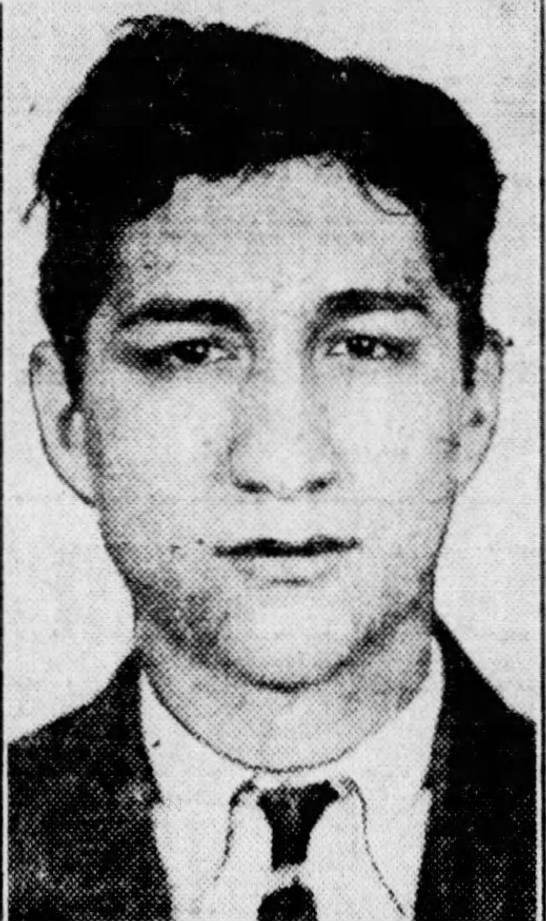
 Danny Vallo was 38 year-old Chicago gangster with a history of changing allegiances. The Chicago Tribune stated that he was at first associated with the Gennas and then joined the Capone Syndicate. By 1930 he was allied with the Moran-Zuta- Aiello combination.

Vallo was not a product of Prohibition, his record predated the Eighteenth amendment when he was a member of a bandit gang headed by Edward Wheed. More arrests came for robberies. By the end of 1921, it was stated that Vallo had succeeded Paddy the Bear Ryan as leader of the Valley Gang after the latter's murder in 1920. He was arrested for murder in 1921 while getting the vote out for doomed mobster politician Anthony D'Andrea. Eight years later he was also picked up as a suspect in the St. Valentine's Day massacre.

The evening of August 13, 1930 found Vallo spending time with his young fiance. The started the evening at Vallo's sister's house where the hoodlum made three phone calls to a place in the Franklin Park district. After the third call he informed his fiance that he would have to take a ride out there and asked her to join him. After driving a bit, Vallo pulled over at a cafe in Niles Center (now Skokie) to make another call to the Franklin Park party. After the call, he returned to the car and invited his fiance in to get a sandwich. Vallo headed back to the cafe as his fiance stepped from the car. While exiting the auto, the fiance saw two men with sawed off shotguns step from some bushes. Before she had a chance to scream both fired at Vallo, who collapsed with wounds to his head and torso. He died an hour later.

danny vallo -

Danny Vallo

Saturday, August 1, 2020

Put Another Nickel in, in the Nickelodeon

-

The evening of August 1, 1930 found Aurora, Illinois gentleman J.H. Goodman feeding a steady supply of nickels into the jukebox at the Lake View hotel in Delafield, Wisconsin. Outside dozens of people, done swimming for the day, were hanging out enjoying themselves. Inside a handful of  young couples continued to dance while the affable Mr. Goodman kept the tunes a-coming. Good music, good conversation and good company. All in all it was a lovely summer evening; and then the gunmen showed up.

It turns out the man with the endless supply of nickels wasn't J. H. Goodman from Aurora but Chicago crime boss Jack Zuta. Zuta started his criminal career by managing houses of prostitution. At one time he was allied with Al Capone but by 1930 his loyalties had shifted to the North Side of the city and he was in an alliance with George Bugs Moran and his gang as well as another Capone enemy Joe Aiello. By this time Zuta was a money man collecting and paying thousands of dollars to keep things on the North Side running smoothly. 

Things stopped running smoothly that spring. Jake Lingle, on paper a $65-a-week reporter but in reality a fixer who was "like a son" to the Chief of Police. With this relationship Lingle was able to tell gangsters what they could and couldn't do, tip them off to raids, and make things right for a price. In this position he had many enemies. That spring, a number of big shots, including Al Capone, were mad at him. But it appears that Jack Zuta was the only one to take his anger to the extreme. Reasons for Zuta's ire resulted from either having a North Side casino raided after receiving a payoff or taking a bribe to allow a dog racing track to open, then not following through, and, to add insult to injury, not give back the bribe. Zuta had had enough and had the "newsman" bumped off. The result was that the Chicago underworld was turned upside down. Every gang felt the pinch. Clubs and casinos were raided. All gangsters were losing money.

On behalf of gangland Capone took care of the Zuta problem. Knowing that Chicago wanted him dead, Zuta fled to Wisconsin circa July 2, after narrowly missing an assassination attempt.  By August 1, he was J.H. Goodman from Aurora, Illinois feeding nickels into a jukebox so the youngsters could dance. It was about 10 p.m. when two cars bearing Illinois license plates pulled up. Five men alighted from the sedans. All holding weapons. Two stayed outside and kept an eye on the vacationers. The other three, one with a shotgun, the tallest one, said to be Capone ally Danny Stanton, carried a pistol. The third man a Thompson. They walked into the bar and said, "This is a stick up!" the bartender laughed. Stanton fired a shot into the floor. The bartender stopped laughing. They walked through the bar without bothering any of the patrons and entered the rear dance hall where Mr. Goodman had just dropped a nickel into the slot and chose a popular song of the day, "Good for you, bad for me"

Mr. Goodman was facing the the jukebox as the gunmen approached. A young collegiate was in their path. "Out of the way, kid!" Stanton demanded. The kid hit the deck and the trio blasted Zuta into oblivion.

Obit - Jack Zuta - Capone era mobster and Capone antagonist ...
Jack Zuta

Thursday, July 16, 2020

Really Detroit, Another One!!

 -

On the morning of July 16, 1930 A young Detroit woman left her house to run up to the local store. On her way she found the body of gangster David Overstein lying between two garages. He had been shot three times in the side of the head. She alerted a neighbor, who in turn, called the police.

Overstein was an ex-convict who had ties to the Purple Gang. In the early Twenties he was reputed to be a member of  the Oakland Sugar House gang. In 1928 he was sent to the Michigan State Reformatory for breaking and entering. Upon his release it was said that he got involved with bootlegging.

Overstein was last seen hanging around a corner at about 10 p.m. the previous night. Neighbors who lived nearby the garages where the dead gangster was found, said they heard one shot, around midnight, followed by three more. 

overstein -
David Overstein

Tuesday, July 14, 2020

Another Murder in Detroit

 -

The bullets were flying in Detroit the spring and summer of 1930, and bootlegger Henry Tupancy caught his lethal dose on July 15, 1930. Tupancy was arrested in 1922 for selling booze in his speakeasy and paid a $500 fine. By 1930 he was also producing the stuff, as was evidenced in a number of corn sugar receipts found on his person after he was killed.

Tupancy was sitting in his car along with another bootlegger, Louis Salvio, who was most likely a member of the Licavoli gang, having been arrested that spring with a number of Licavoli - Moceri gangsters following the murder of a police officer.

As Tupancy and Salvio sat in the former's auto, witnesses of a nearby street car, as well as some children playing, saw a man wearing striped linen pants, a cream colored silk shirt and a pair of black and white shoes, (no coat or hat) approach the car and, producing two guns, open fire on Tupancy. The victim was hit by nine shots and died. Salvio took a bullete to the gut, hopped out of the car and ran a short distance before collapsing.

Mobster Peter Licavoli was arrested for the murder. At the hospital, and later on the stand, Salvio played mute. He said he didn't even know Tupancy and didn't recognize the shooter. Seeing that Salvio, was probably a member of the Licavoli gang and not the intended target, he may have been setting Tupancy up and was hit by friendly fire.

Though Salvio didn't identify Licavoli as the shooter, a number of witnesses did and he was shipped off to prison for life. Salvio was living on borrowed time however. He got his the following October, but it wasn't the bullets of rival gangsters that brought him down, it was bullets from a jealous husband. The gangster was rooming with a married couple in a volatile relationship. The husband left home for period of time and came home and found his wife and Salvio "talking". The enraged husband killed Salvio and shot his wife, who survived.

tupancy -  salvio -
Henry Tupancy      Louis Salvio

Sunday, July 12, 2020

Sam I Was

 -

Twenty-eight year old Sam Cilluffo, started in the Detroit booze racket at the on set of Prohibition. He had been arrested five times since 1922, and did a stretch in Leavenworth for bootlegging. Cilluffo worked for East Detroit mob boss Angelo Meli, who during the summer of 1930, was at war with the West Side's Chester LaMare.

After the murder of two of LaMare's boys on July 7, the West Siders struck back by eliminating Cilluffo. At about 12:25 AM on July 12, Cilluffo was driving along in his coupe when a sedan containing three men swung up along side him. One of the men blew out Cilluffo's rear tires with a shotgun blast, forcing the gangster to stop. When he did, the sedan drove past and another hoodlum raked Cilluffo's coupe with a Thompson machine-gun, hitting the gangster eleven time.

 -
Sam Cilluffo

Friday, July 10, 2020

The Tommy Knockers

 -

Thomas Bonner was described as a low level Chicago racketeer. He dabbled in booze and narcotics but also took part in some hold ups. None of these paid him much. But it did keep him involved in the underworld which came in handy because he was a police informer.

Perhaps it was his loose lips that kept him out of jail, if so the trade of wasn't worth it. One of his confederates was Big Earl Herbert a ranking member of the Joe Saltis gang. In addition to making money money in Saltis's bootlegging business, Herbert also dabbled in armed robberies and counterfietting.

One day he saw a police lieutenant leave Bonner's house through the back door. Afterwards, he kept an eye on Bonner's abode and saw the officer come and go a number of times. It was determined that Bonner was a snitch and had to be dispatched.

On July 10, 1930 Herbert and another man went to Bonner's house. Mrs. Bonner stated that she heard her husband let the two men. After they conversed for a few minutes she heard one of the men yell,
 "You dirty rat stool!"
"You've got me all wrong on that." Bonner pleaded.
"No we haven't. Not this time."
The next thing Mrs. Bonner heard was two gun shots and her husband crashing on a table. Running back into the room she saw her prone husband, dead with two bullets in his head, and the two gunmen running from the house.

 -
Thomas Bonner

Herbert would remain free until October 11, when he was arrested while sleeping in a basement with thousands of dollars worth of tobacco products that had been stolen from a Walgreen's warehouse.

 -
Big Earl Herbert

Thursday, July 9, 2020

Louis Loses

 -

Thirty-four year old Louis Candia had made a small fortune bootlegging in Detroit. With his profits he bought the Tremont hotel and was part owner of a speakeasy called the Ocean View Yacht Club (an odd name considering Detroit is about 700 miles away from the nearest ocean). Due to his mis-management, and the fact that he was dealing in prostitution, he lost his hotel and was facing deportation.

Only July 9, 1930, Candia entered the Ocean View Yacht Club at the same time as another guy. They sat close to each other and soon and argument broke out and both men stood up and drew their weapons. Candia was late on the draw and was hit by three bullets. As he fell he fired off a shot but only succeeded in hitting the bar manager's hand, who was trying to prevent the gunfight. Candia was dead when he hit the floor and his killer escaped.

Initially, police thought that he may have been killed by a former associate for some old bootlegging grudge, but it was determined that the fight was over a woman.

 -
Louis Candia and the Ocean View Yacht Club


Sunday, July 5, 2020

Murders in Cleveland

 -

Ninety-years ago there was tension in Cleveland, Ohio's underworld. Seven brothers by the the name of Porrello were the top purveyors of corn sugar in the region. A most needed ingredient in the manufacturing of alcohol. The Mayfield Road Mob, the top Mafia gang in the city, headed by Frank Milano, was attempting to seize control or, at the very least, shake down the Porrellos for protection money.

On July 5, 1930, Joe Porrello, head of family operations, and his lieutenant, Sam Tilocco, attended a meeting with Milano and a hand full of his gang at Milano's Venetian saloon. They played cards for a while and Milano laid it all out. He wanted a piece of the Porrello's corn sugar business. Porrello said no and, as he and Tilocco were getting up to leave, the guns came out.

Porrello never made it out of the saloon, with two bullets to the face, he fell to the floor. Tilocco, though wounded, was able to stagger outside before collapsing and having a another round of shots fired into him by Milano's retreating men.*

Joe Porrello

*For the full story on the Porrello clan and the Cleveland Mafia, check out Rick Porrello's book in the link. A great book.


Friday, July 3, 2020

Fireworks a Day Early

 -

For gangsters William Cannon, George Collins and Mike Stitzel, 4th of July fireworks went off a day early in Detroit. Both Cannon and Collins were Motor City desperadoes who had moved to Chicago, probably for their own safety.

Cannon was shacking up with a woman named Julia Kuffell, who was the widow of a North Side gangster named Henry "Hoops-a-Daisy" Connors. He borrowed her car at the end of June and said he and Collins had to go to Detroit on business. She took this to mean, picking up booze.

July 3, 1930, found Cannon, Collins and Stitzel shooting pool. The trio left the pool hall and walked to Cannons sedan, which was parked in front of the Lasalle Hotel's entrance on Adelaide Street. As the men walked to the car they noticed two men following them. One poorly dressed, the other in a blue suit and panama hat.

"Who are those guys?" Stitzel asked Cannon.
"I don't know. I've never saw them before," Cannon replied.

At the car, which was parked between a cab and another auto, Stitzel climbed into the back seat. Collins the passenger seat and Cannon behind the wheel. Initial reports stated that, as the latter worked to get the car out of it's tight parking spot, the man wearing the panama hat walked out of the Lasalle and up to the car.

"They dropped Collins first and then Cannon," Stitzel would tell the police, "I knew what was coming so I slumped in the back seat, all doubled up. But they got me anyhow."

 -
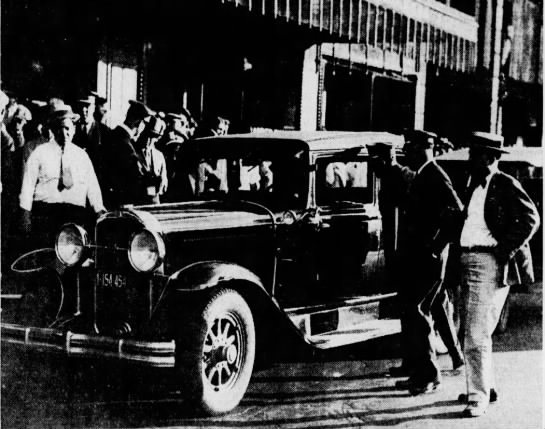
Police inspect the death car

The following day however, it was reported the the gunman actually jumped on the running board and swore at Cannon in Italian and shot him before turning the gun on Collins. Both versions ended up with Stitzel getting it last.

Following the shooting, the gunman placed the gun in his pocket and entered the Lasalle Hotel through the Adelaide Street entrance and exited out on Woodward Avenue.

Cannon and Collins were both 28 and each had fifteen arrests under their belts. They each had badges provided by Stitzel and it was believed that they were murdered for shaking down speakeasy owners. Though it was initially reported that gangster Fred "Killer" Burke was possibly the gunman, Stitzel, who said he knew Burke, stated it wasn't him.

Cannon - Collins -
William Cannon                George Collins


Tuesday, January 28, 2020

Red's Dead Baby, Red's Dead

 -

Ninety-years ago today Charles "Red" Donnelly's name was added to the list of former White Hand gang leaders. Red's record dated back to the teens when he was arrested with Wild Bill Lovett for homicide back in 1919. Over the course of the decade, as the gang leaders fell, Red's stock rose in the gang. Sometime around mid 1928, we are told, Red took over the reigns of the White Hands water front rackets.

Like those before him, his days were numbered and he got what, assuredly, he knew as coming at some point. As he watched his men load a ship word came to Red that somebody wanted to see him in the "shack", the shack being the shanty that doubled as an office. He walked into the shack. Inside some words were exchanged, possibly in a loud manner. Next two shots were heard. One went into Red's left temple the other his ear.

Though nobody saw anything leadership was passed to one Mathew "Matty" Martin, who, like Red,...well, that's another post.

red -
Red Donnelly